
This is the Last Time We’re Going to Hòa Bình
By Randell John Pallesco
Yes, you read that right. It is the last time we’re going to Hòa Bình Province. It’s not that we didn’t learn a lot, quite the contrary. Nor simply because it’s the final stop of the whole Living Lab journey. But because, quite literally, Hòa Bình is being removed from the map — to be consolidated under the larger Phú Thọ Province. This, some say, will streamline administration, boost economic synergy, and improve fiscal efficiency (Vero Advocacy, 2025). There is a certain weight to that; a reminder that change is both fast and constant in this part of the world. For me, this “update” set the mood for the entire Living Lab. When everything around us is shifting, what then is the invitation? When we were tasked with mapping waste in Việt Nam, our first reaction was confusion. We signed up for the mapping group, yes, but we asked ourselves, “What about waste specifically?” Alas, if you do not know what to write, read. Together with my teammates: Sophie, Hajar, Noa, Gaia, and Tari — we began looking up literature surrounding the topic. We found a widening research gap surrounding the trash problem. We found a widening research gap surrounding the trash problem: waste generation in Việt Nam is rising rapidly, yet local, spatially grounded evidence on how waste is actually produced, moved, and disposed of (especially in rural and tourism-affected areas) remains limited or poorly documented (Hoornweg & Bhada-Tata, 2012; Duc Luong et al., 2013; Chaudhary et al., 2021). At the same time, tourism growth and global waste flows, including imported plastics, are placing new pressures on local systems that existing infrastructure and data fail to fully capture (Phi et al., 2016; Thapa et al., 2024). We planned accordingly for these,incorporating and neatly articulating it in our action plan. Yet, when the Living Lab came, we encountered a series of surprising findings and stumbling blocks. I will attempt to tell them in the following parts of this blog. However, upon reflecting on it, and with focus on ground realities constantly shifting, it seems that the invitation of the Living Lab is a movement towards certain disposition shifts. Here, I share two of them.
Rhythm in Unpredictability
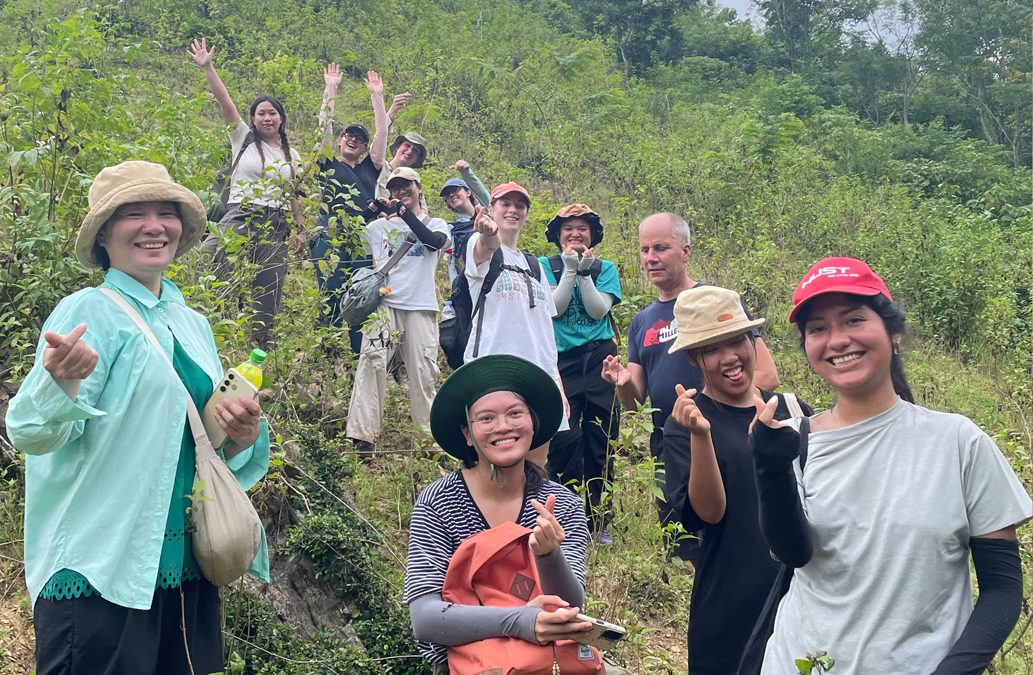
Initial scoping with the whole team. Learned a lot from this and made sure we adjusted accordingly! © SUSDEV
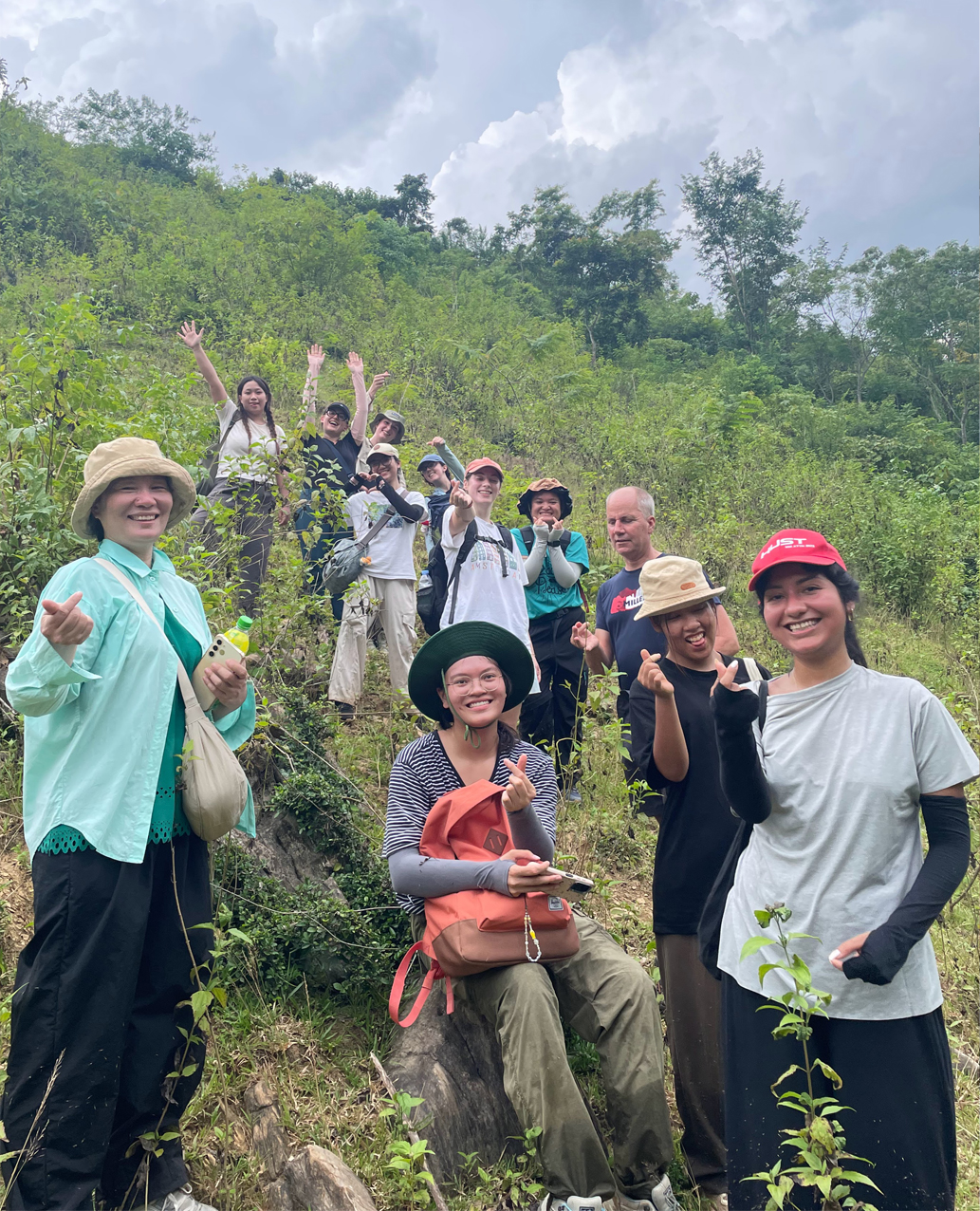
Initial scoping with the whole team. Learned a lot from this and made sure we adjusted accordingly! © SUSDEV
On one hand, the Living Lab taught us to have a disposition that is more embracing of change and flexibility. Remember when I said that Hòa Bình is getting “deleted”? This renovation is promoted to give way for better management. We gathered from our interview in Hang Kia that such revisions are also necessary in waste management, since consolidation avoids overlapping initiatives among neighboring provinces. Albeit, with some birthing pains (e.g. managers not having sufficient knowledge of the new areas within their new scopes). When we got this news, we knew it was just the start of a journey full of changes and how we need to adapt in stride. To roughly quote one of our mentors: “When it comes to fieldwork, the only thing you can really prepare is your research question. Beyond that, everything really just comes together on the ground.” Indeed, even with a semester’s worth of preparation behind us, it often felt like we were playing impromptu jazz on the ground. When we first arrived in Hòa Bình and went on our initial scoping, we had to make drastic changes to our research design. Instead of scoring waste risks through a metric, we chose to score waste buildup through transect mapping. Simultaneously, mapping interest points such as shops, burning evidence, and other important infrastructure (i.e. incineration plants, shops, and centers of commerce). With the guidance of our mentors, Anton and Noelia, we looked for ways to better capture relevant quantitative data from our transects. Like jazz players, we slowly learned to harmonize. Each playing our own notes, yet producing something cohesive. Rain or shine, the team kept pace. Innovations abounded, such as when we pioneered the use of KoboToolbox in the Living Lab — enabling us to gather accurate geospatial data accessible on everyone’s phones. Also, who knew Strava could be effective for field research to be used for drawing transect routes? We initially planned to use our QGIS-drawn routes for navigation, which I imagine would have been difficult to work with while moving. Using Strava made our mapping easier and more comprehensive, giving us data on length, incline, and terrain; a merciful detail for those who could not bike too far. Bonus! You can post it in your own strava as your own mapping day trophy.
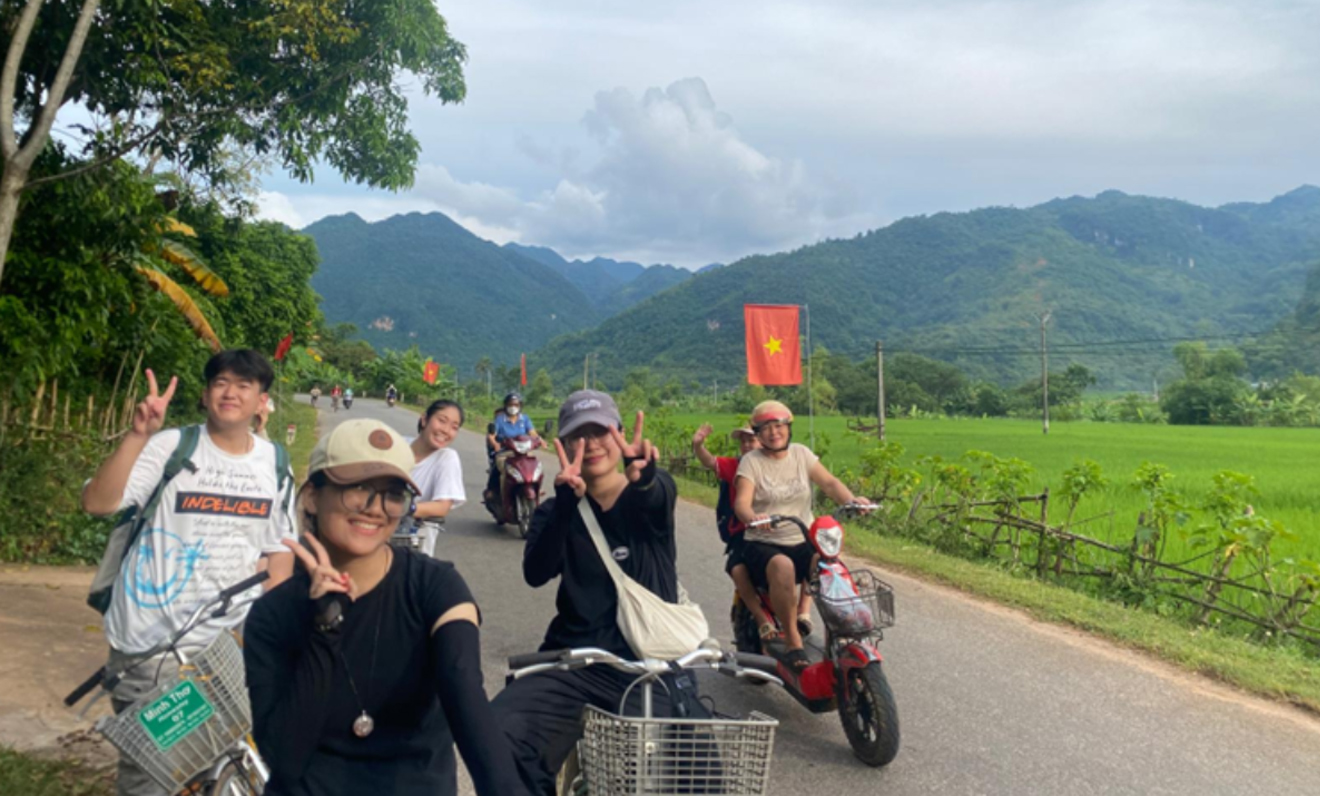
Notwithstanding some flat tires and tough terrain, morale was high during transect mappings © SUSDEV
Of course, not every note fits perfectly. At this point, it’s important to acknowledge our so-called citizen mappers — our peers from VNU as well as all our colleagues from SusDev. They all went to great lengths for our data: biking through long stretches of uneven roads, dust collecting on their shoes, and the sun pressing on their backs. The learning curve was steep; at times, because of GPS inaccuracies, data points appeared lost. Far off near the Việt Nam–Laos border! Where some (I) were tempted to remove these misplaced points, the team instead chose to do a thorough data cleanup before processing. In this rhythm of adjustment, we ended up collecting more than we had planned: 720 additional points and 175 transect segments, amounting to 75 kilometers of roads mapped across nine communes. As both relief and reward, our mappers were greeted wherever they went with sharp yet jubilant shouts of “Hello, hello!” from children going to or coming home from school, the fizzy sweetness of cold roadside drinks, and the cool shade of trees and stalls that offered brief rest under the soft September wind. Other than our transects, we initially ruled out the possibility of gathering qualitative data during the planning stage to focus on quantitative data, since no such research had previously been conducted in this area. But on the field, we agreed, with encouragement from our mentors, to also collect some much-needed interviews. Instinct set in for our interdisciplinary yet mostly social science–trained team, and we managed to conduct 20 key stakeholder interviews, even including in the Săm Khòe incineration plant. My mom would probably think I was losing it if she knew how excited we were to visit an incineration plant, but being there mattered. Seeing the facility firsthand helped us understand how formal waste management actually operates in the region. More importantly, how it intersects (or fails to intersect) with household practices and informal recycling on the ground. What the interview with the incinerator manager made clear is that while formal waste infrastructure does exist, its functional capacity falls far short of the scale and complexity of the waste it is meant to manage. Despite operating almost continuously from 6:00 am to 10:00 pm and serving multiple communes, including Mai Hich and Hang Kia, the incinerator depends heavily on manual labour, improvised sorting, and the burial of residues, rather than on reliable, well-functioning technological systems. More on informal recycling, it is in fact one of our biggest learnings that beyond what we saw on our transect walks, various informal management systems existed alongside the formal ones. Take recycling, for instance. At first, we assumed there was limited, as trash seemed to be hauled off indiscriminately without formal sorting. But we later learned that locals themselves have a knack for sorting; setting aside bottles, glass, and cans to sell to local traders, who then send them off for recycling. Boosting materials that would have otherwise been discarded back to use. Still, and quite heartbreaking, incinerating the trash is one of the main disposal management systems as the government also provides small local incinerators in the villages. These last-minute adjustments and their subsequent results showed how the Living Lab constantly tested our adaptability and how fast we needed to think on our feet. Personally, the experience was stimulating, captivating, and fun all at once. I never felt at ease with unpredictability, but after a while, we learned to find our rhythm.
Return to Things Themselves
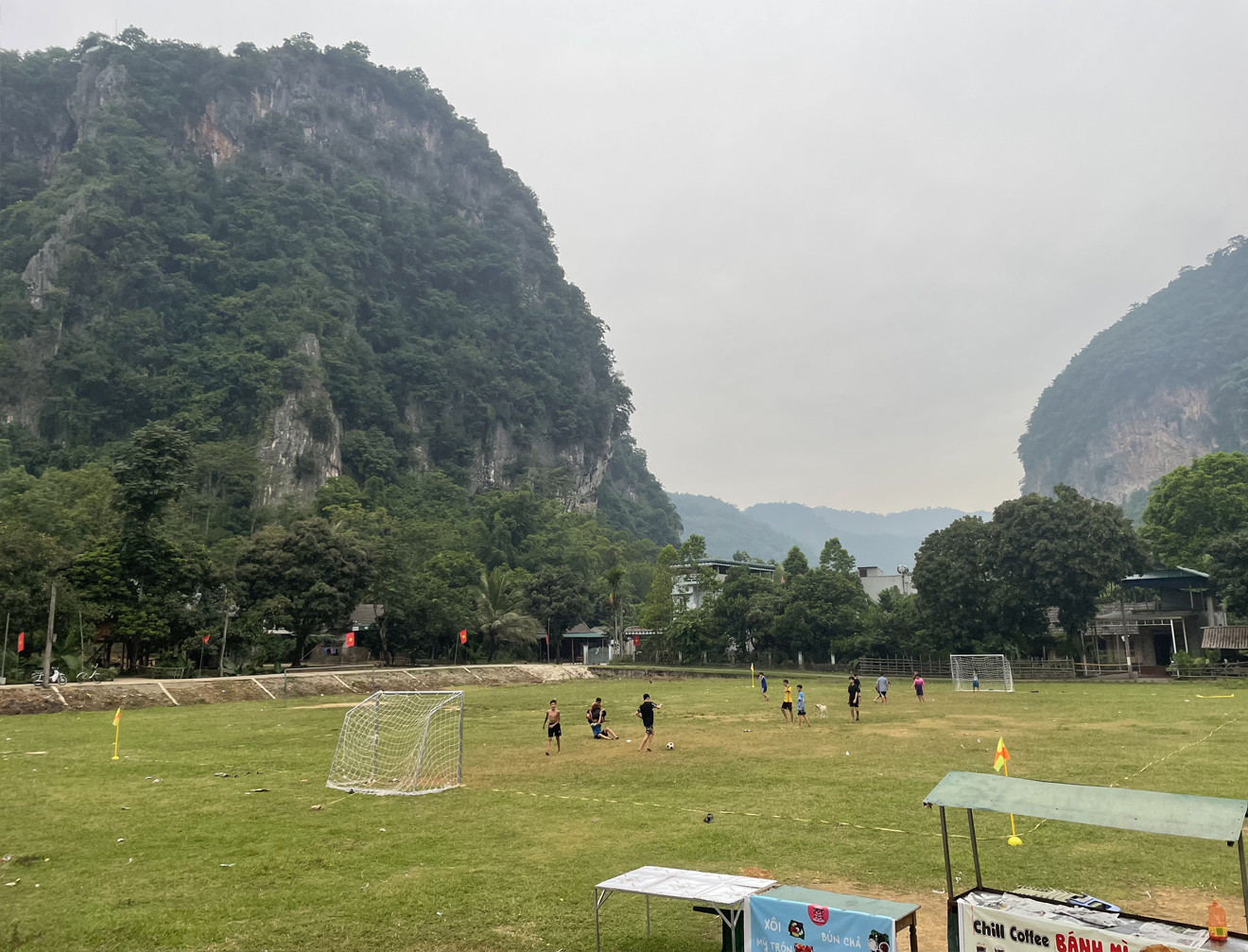
Each commune was different in their own ways so we had to pay close attention to details! ©SUSDEV
On the other hand, the Living Lab became, for me, it was a hands-on exploration of lived experience. It is an invitation to encounter the world before our theories about it. It taught us to return to things themselves. Down to the essence of what we actually study. Such as, how people on the ground experience these issues in their own subjective, first-person view, before fitting their answers into our academic frameworks.. Take for example the complex link between sustainability and waste management. I remember when Professor Lâm urged us to keep our questions simple and relevant to the interviewee. She said that if we were to ask about waste management systems, we should not begin with the abstract “How does waste management in your commune play a role in your everyday life?” but rather with the concrete and practical “How do you dispose of your waste?” or “What is your experience with waste disposal?”. Come to think of it, this principle should be second nature to us. And yet, a much needed nudge from Professor Lâm. This guidance helped us return to waste management in its experiential essence, framed by the meaning-making of our interviewees. This experience of “returning to the essence of things” also required another kind of attentiveness. One of preserving the richness and meaning of local perspectives by being conscious of our own assumptions and prejudices.
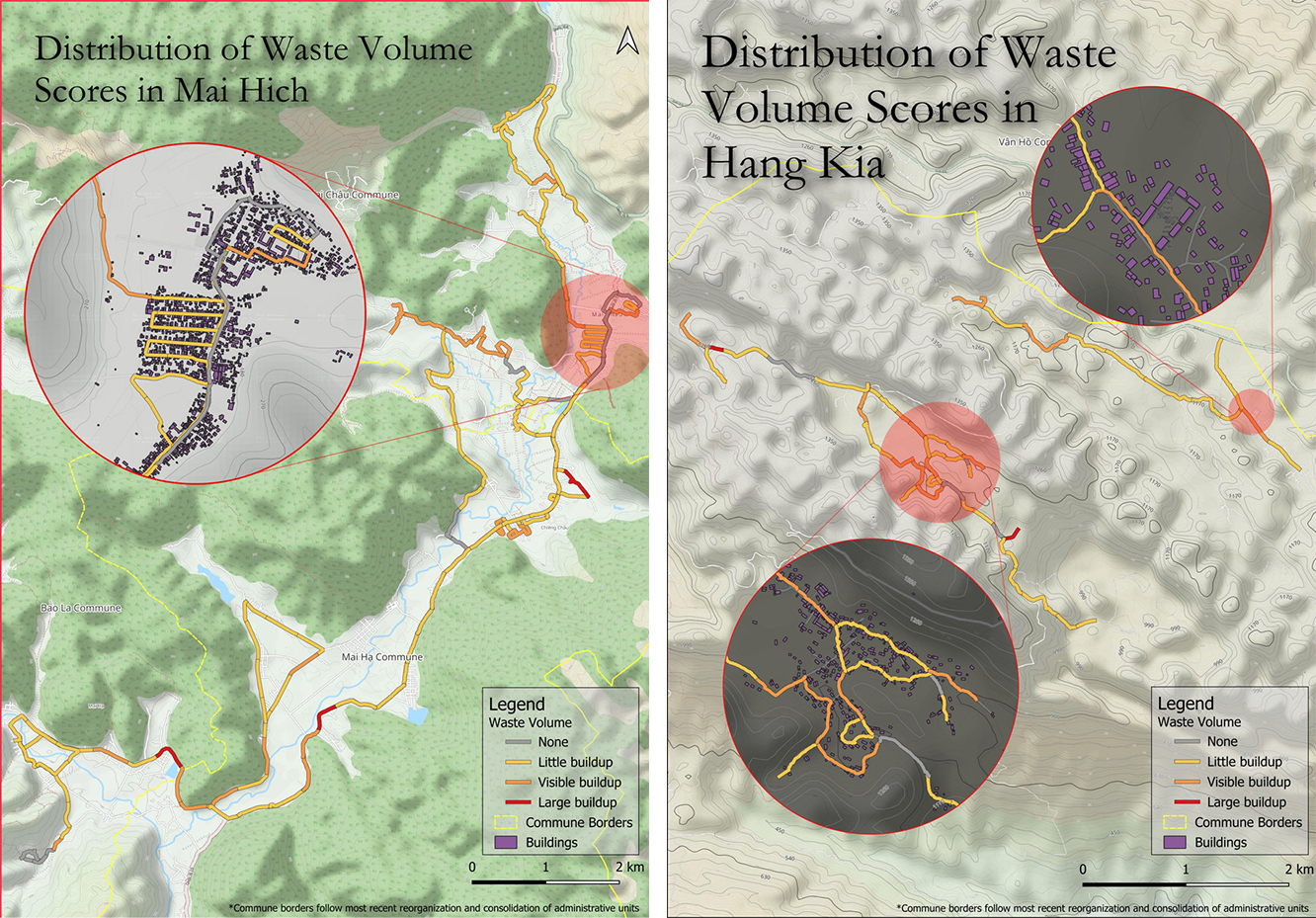
Just a sneak peek! A lot of data gathered so a lot of information to analyze as well. ©SUSDEV
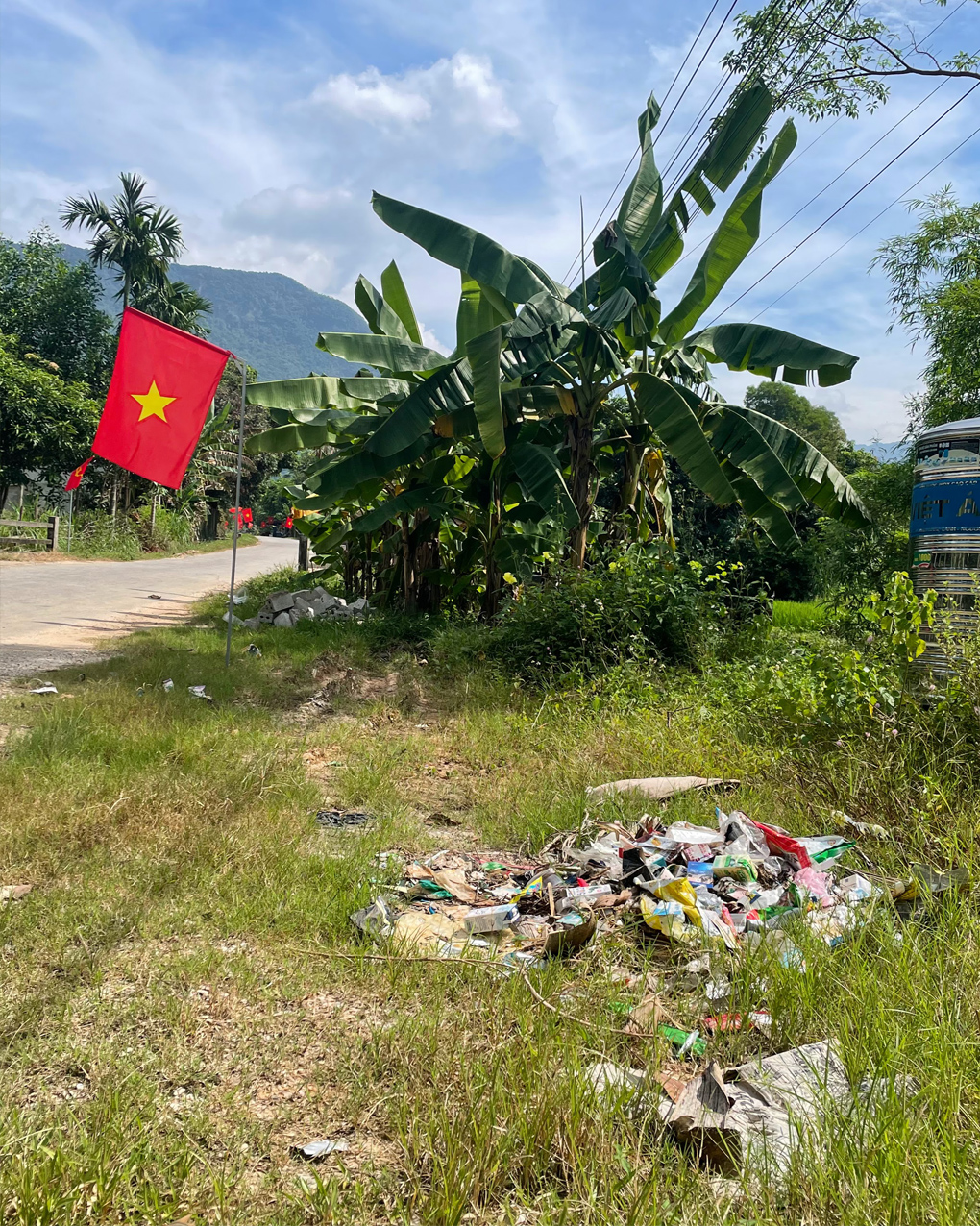
For a concrete example, the mapping group (a.k.a. biking & hiking group), spent long hours under the sun noting waste patterns through KoboToolbox, trekking over uneven terrain and dusty mountain roads. Initially, we assumed that in the context of strained formal waste collection and segregation systems, more people would mean more waste. But as the data rolled in, this turned out not to be the case (see map above). In the case of Hang Kia, we found that there is indeed a significant positive association between building density and waste spread and diversity (𝜌 <0.05). One early interpretation is that these areas fall between formal services and everyday oversight, far enough from people to be unnoticed, yet close enough to be easily used as disposal spots.Terrain could also have something to do with this. While not certain of the cause, it is essential to start with establishing correlations. This way, we can see how waste follows the contours of infrastructure and daily mobility, perhaps aside from just population density. The mapping exercise tested not only our physical and academic endurance, but also our emotional and interpretive openness. For me, what sums up the experience best is that it assessed our capacity to shed presuppositions and show up with an attitude that embraces, in all its richness, the ground realities. Certainly, there is more to unpack, but these encounters make the Living Lab an exercise in phenomenological understanding. The kind that invites to see, to listen, and to experience before we interpret.
Musings from an ASEAN Neighbor
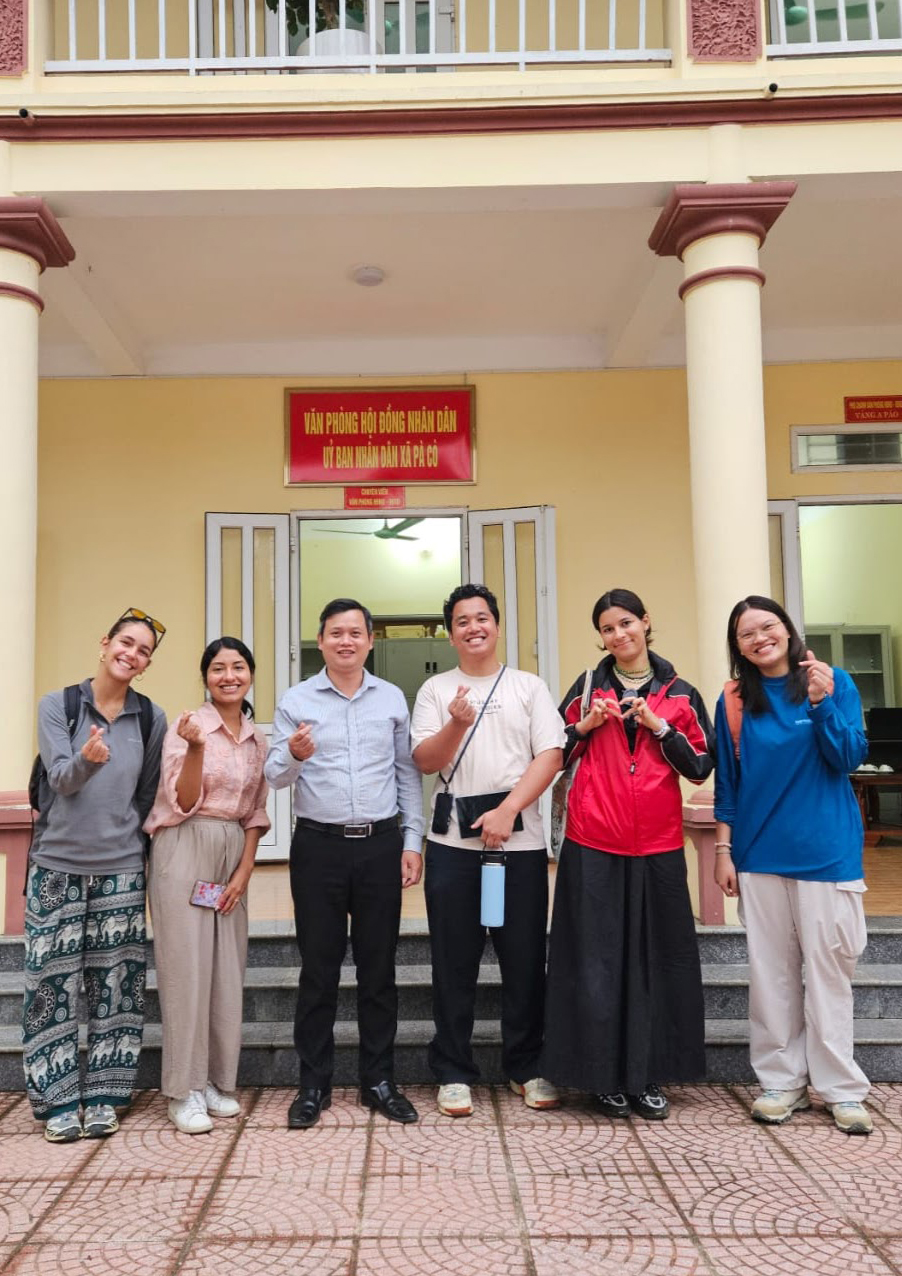
Each interview gives a new layer to the topic. Some interviews are more nerve wracking than the others! ©SUSDEV
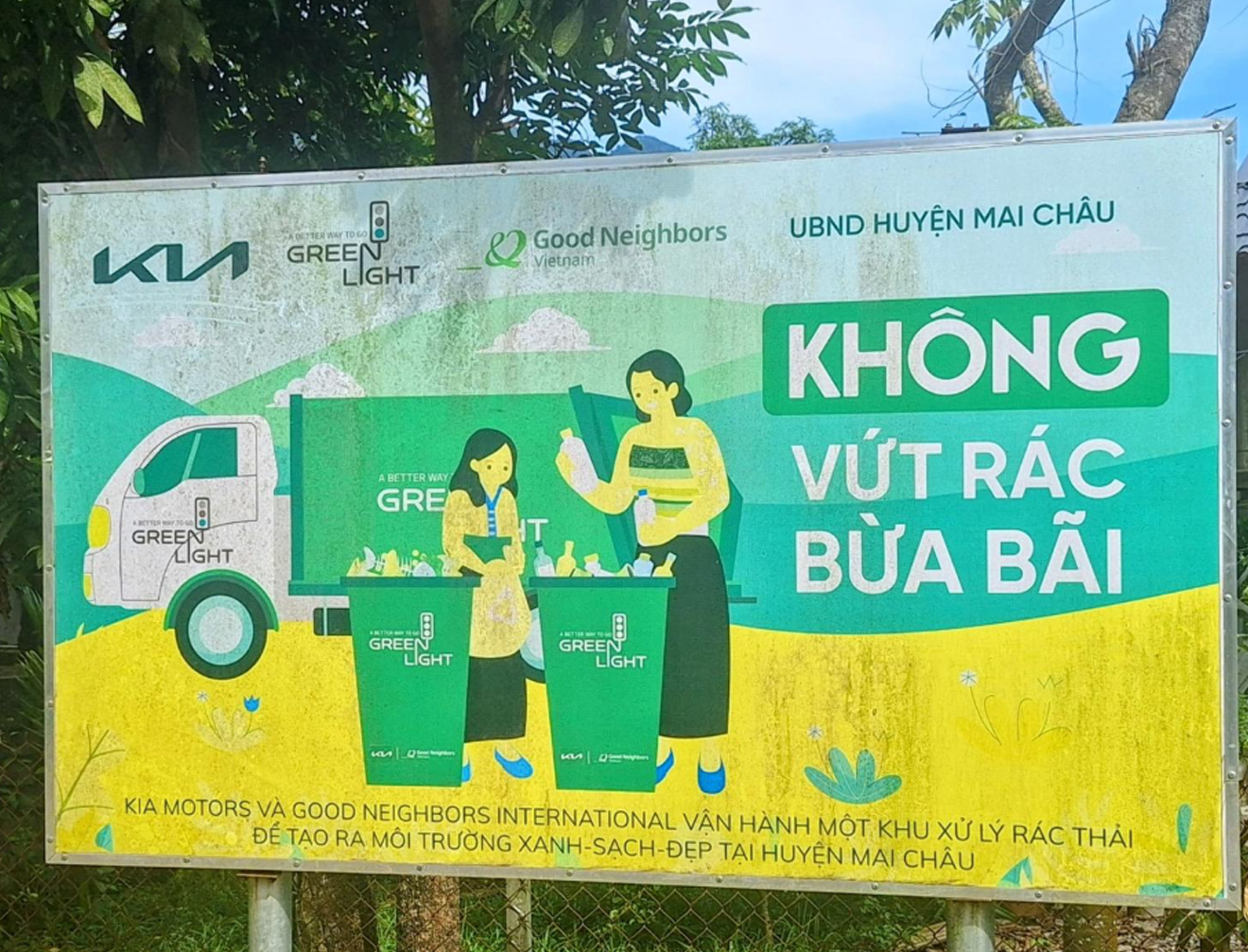
Nearing the end of this blog, I would just like to reflect on how Việt Namhas come very far, and how rapid changes seem to manifest. During our sessions at VNU, we learned about the Đổi Mới reforms and the country’s gradual opening in the 1980s. In the field, these transformations took a tangible form like the commune’s experimentations in collaboration between corporations and organizations, like KIA and Good Neighbors, and the government surrounding waste management. While structural changes are palpable, it remains worth questioning the actual impact of initiatives like Good Neighbors. We saw the physical presence of those sponsored billboards and trashbins, but when asked, the villagers seemed not to know about these projects and they hoped that there would be more workshops or things to do. After all, raising awareness does not necessarily translate into measurable change. Maybe that’s why we wanted to try this pilot citizen science method in the first place. Employing citizen scientists carries with it our hope that, in time, this method has the potential to be scaled up (see Sprinks et al., 2025). Hopefully, an experiment that other groups can build on and experiment with as well.
Indeed, across the region similar shifts are underway. In my home country, the Philippines, the winds of change are also felt. Unevenly, perhaps, but steadily. Slow progress is still progress. What stands out most is how these shifts take different shapes. Documenting them through our maps, we carry home with us the evidence that development does not follow a single script; each community adapts, improvises, and redefines progress in its own terms. All the while, moving toward globally shared aspirations for dignity and sustainability.
Lastly, and before I close, I think it was easy for us to dive right in with our initial plans and academic assumptions. Yet, standing on the ground, after all our research, encountering realities that defy our frameworks, it humbles and reorients a person. From both our quantitative and qualitative data, it can be confirmed that local practices are neither random nor isolated; but rather are continuations of long histories — ways of coping, surviving, and living that evolve alongside a people’s own journey.
Indeed, we will not be going back to Hòa Bình. At least, not by that name. And though the map may change, progress and learning continue!
We would like to express our thanks to our following peers for their assistance and support: Mai Linh, Minh Hạnh, Minh Ánh, Bảo Nhi, Khánh Ly, Thuỳ Trang, Quyết, Dương, Minh Thu, and Anh Thư, our colleagues from VNU. Without you, we would have been literally and figuratively lost.
References:
Chaudhary, A. H., Polonsky, M. J., & McClaren, N. (2021). Littering behaviour: A systematic review. International Journal of Consumer Studies, 45(4), 478–510. https://doi.org/10.1111/ijcs.12638
Duc Luong, N., Hoang, M., Bui Xuan, T., & Hung, N. (2013). Challenges for municipal solid waste management practices in Vietnam. Waste Technology, 1. https://doi.org/10.12777/wastech.1.1.17-21
Hoornweg, D., & Bhada-Tata, P. (2012). What a Waste : A Global Review of Solid Waste Management. https://doi.org/10.1596/17388
Phi, G. T., Whitford, M., & Dredge, D. (2016). Knowledge Dynamics in the Tourism-Social Entrepreneurship Nexus. Tourism on the Verge, 155–172. https://doi.org/10.1007/978-3-319-46518-0_9
Sprinks, J. C., Dowthwaite, L., Ceccaroni, L., Kiessling, T., Fraisl, D., Maccani, G., … & Malta, M. (2025). Supporting the Upscaling of Citizen Science to Address Global Challenges. Citizen Science: Theory and Practice, 10(1), e23.
Thapa, K., Vermeulen, W. J. V., De Waal, M. M., Deutz, P., & Nguyễn, H. Q. (2024). Towards a Just Circular Economy Transition: the Case of European Plastic Waste Trade to Vietnam for Recycling. Circular Economy and Sustainability. https://doi.org/10.1007/s43615-023-00330-w
Vero Advocacy. (2025). Vero Advocacy Brief: Vietnam’s Provincial Merger is a Bold Bet on Governance Efficiency and Institutional Legacy. Vero. https://vero-asean.com/vietnam-provincial-reform-2025-business-implications/