
Roots of Resilience: Uncovering Vietnam’s Biodiversity through the Living Lab
By Nichole Castillo, Laura De Breuck, Luca Faraci, Tania Villarroel Lopez, Thi Khanh Ly Luong, Nyambura Njoroge, Phong Nhi Nguyen, Ngoc Mai Vu
Vietnam, known for its breathtaking landscapes, warm-hearted people, and amazing cuisine, was a place we were thrilled to explore through the Living Lab project. As part of our Master’s program in Sustainable Development, our research group was assigned the exciting task of investigating plant biodiversity across various land use types. Driven by curiosity, we wondered: What unique insights could this country offer? How might its ecological and social landscape, as a developing country, differ from our own? This was the perfect opportunity to put the theories we’d studied in the classroom into action.
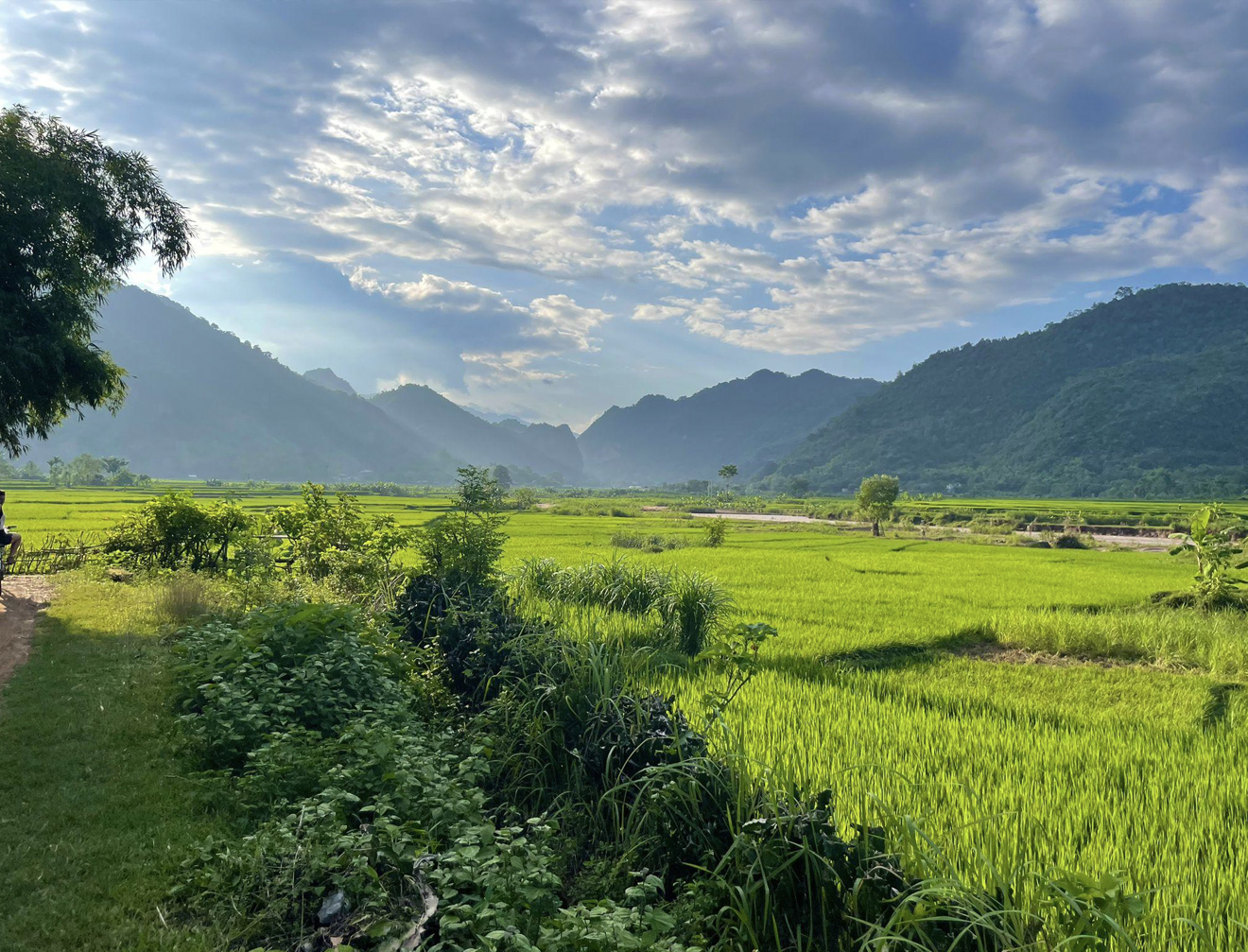
Vietnam Diverse Landscapes © SUSDEV
Preparation and Arrival
Before setting out, we prepared extensively, conducting a literature review, mapping out our research plots, and familiarizing ourselves with the local context. With anticipation in our hearts, we boarded our flight to Hanoi, ready to immerse ourselves in the Living Lab experience. Our fieldwork took us through the diverse landscapes of Mai Hich, Da Bia, and Ban Sung, where we collected data on plant communities across various land uses. Through our work, we aimed to understand how biodiversity variations might influence ecosystem services and contribute to sustainable development goals.
Building
Partnerships and Initial Training Our journey to Vietnam was nothing short of inspiring! We met our colleagues from Vietnam National University (VNU) and presented our action plan, setting the stage for a rewarding collaboration. Our first stop was the beautiful village of Mai Hich, where two intensive training days set the tone for our work ahead. The energy was incredible as students dove into their roles, learning what each research group would focus on and understanding their responsibilities. The enthusiasm and commitment in the team were contagious, and it was clear that this collaboration would have a positive impact.
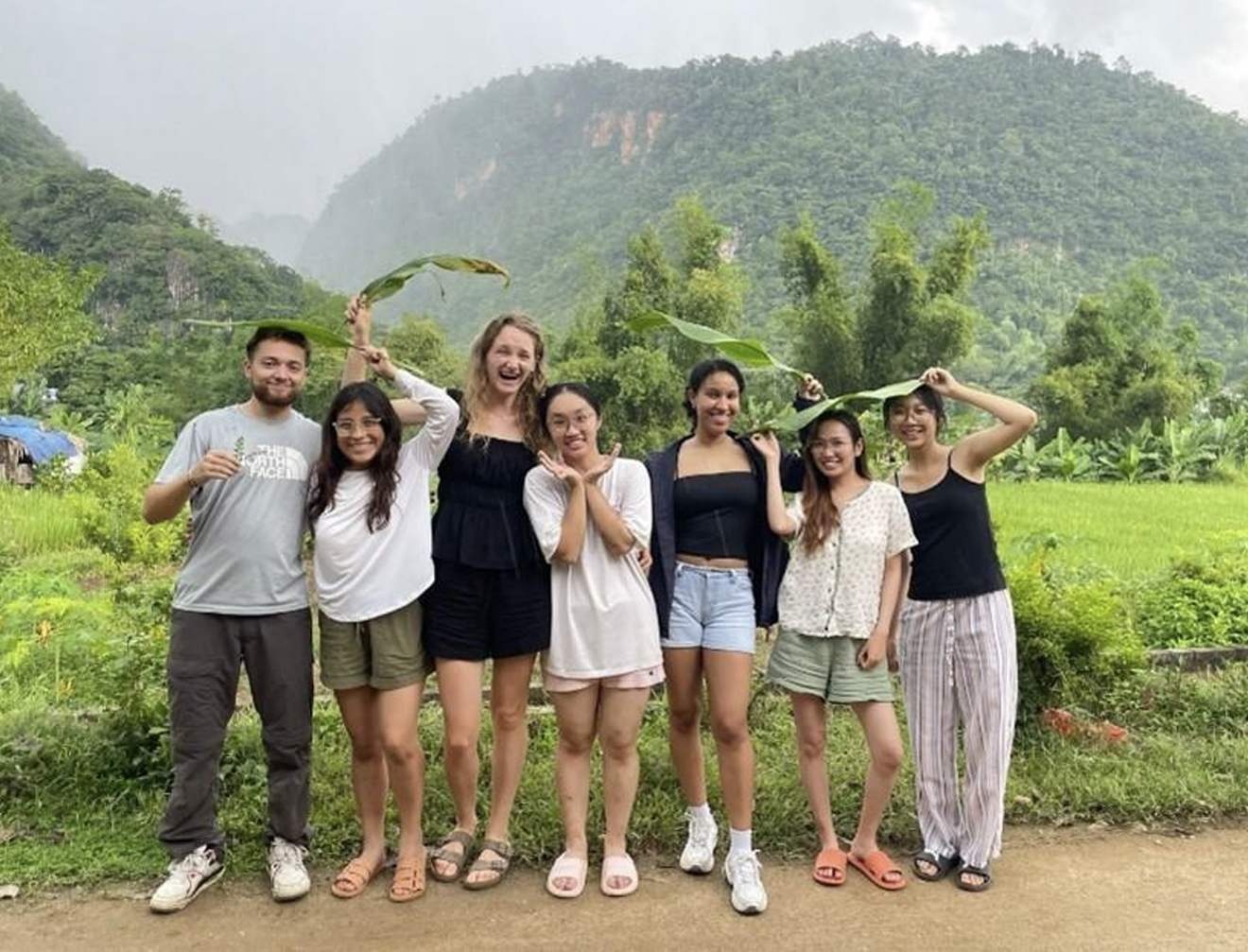
Biodiversity group from KU Leuven and Vietnam National University (VNU)© SUSDEV
Fieldwork in Challenging Terrains
While we knew this journey would challenge us, it was the first time most of us had done fieldwork like this—our motivation and excitement fueled us to give it our best. We sampled 13 unique plots, each with a distinct land use, which sometimes tested our endurance and nudged us beyond our comfort zones. For each plot, we set up a 20×20 meter area with five subplots, working in three dedicated subgroups: soil sampling, herbaceous layer, and aboveground biomass. Teaming up with the Carbon group, who shared our sampling areas, led to a powerful collaborative effort! It’s often said that you learn more by teaching others, and we found that true. Each student had the chance to lead and guide others during our expeditions, ensuring we obtained high-quality samples while learning as much as possible along the way.
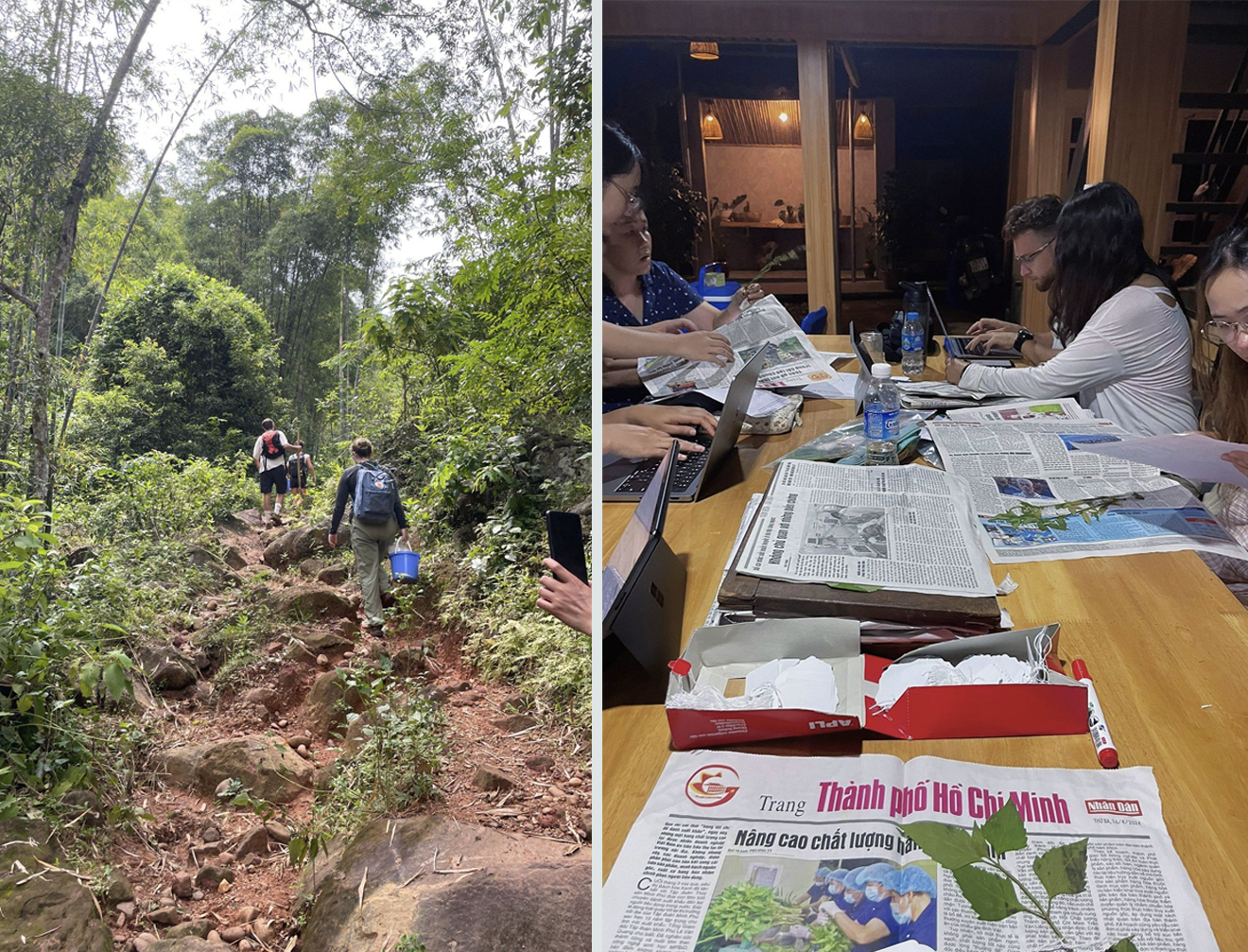
Terrain work and evening Lab work © SUSDEV
Laboratory Work and Plant Identification
The work didn’t stop with field sampling! Back at the lab, we dove into plant identification, spending long nights sorting through data meticulously. Good music and positive vibes kept us going, and we came to truly appreciate Vietnam’s biodiversity, encountering fascinating species like Axonopus compressus and Chromolaena odorata. Alongside identification, we also learned how to measure important plant traits, like leaf area and stomata. Our hard work culminated in a cozy presentation of our preliminary results, where we explored correlations between land use, species richness, and ecosystem services like pollination. We’re eagerly awaiting the full results to compare with 2023, and we’re curious to see how our findings align or diverge.
Preliminary Findings on Plant Diversity in Hoa Bihn
Our preliminary findings already revealed some insights into plant biodiversity across Hoe Binh’s varied landscapes. We identified 360 different plant species. Species richness showed a marked increase of approximately 14 species per plot compared to last year. We observed significant differences in species richness between land use types, with bamboo areas supporting the highest diversity and secondary forests the lowest. Diverse land use also fostered unique plant communities in herbaceous layers, suggesting that a mix of land use types can enhance overall biodiversity. Although pollinator-related ecosystem services didn’t vary significantly across land types, we found that lower elevations tended to support more flowering plants. Regarding functional biodiversity, we collected data on stomata and leaf size for over 100 species to assess the variation in ecological roles within the community.
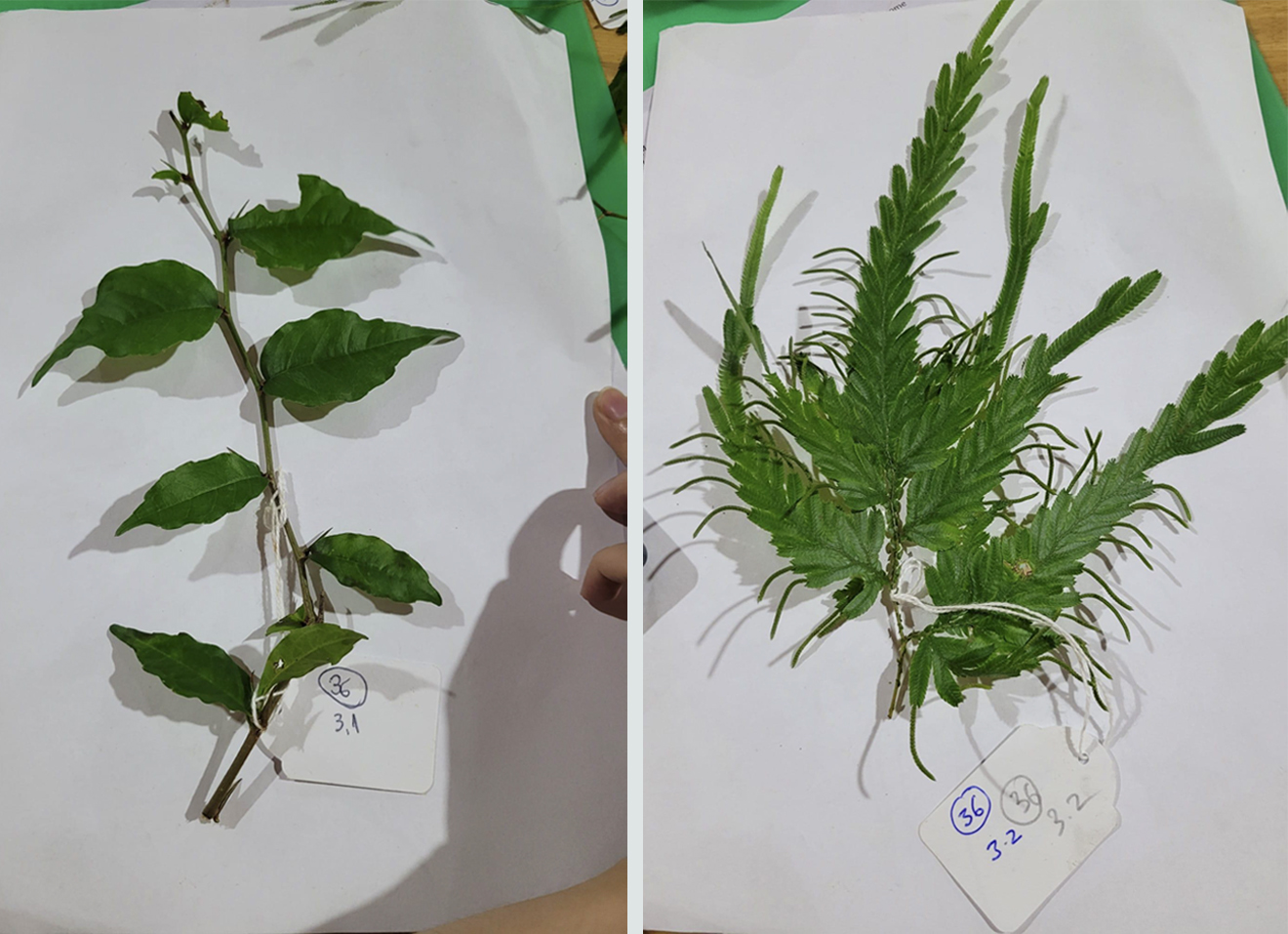
Plant species © SUSDEV
The Importance of Biodiversity and Ecosystem Services
Working in Hoa Binh’s challenging terrain brought the importance of biodiversity to life. The Biodiversity Action Plan we referenced emphasized how diversity supports critical ecosystem services like nutrient cycling, pollination, and carbon sequestration. Every day of fieldwork—whether navigating leech-filled swamps or handling the relentless humidity—felt like a test of endurance and adaptability, highlighting biodiversity’s resilience and the importance of maintaining it to support human needs. Reflecting on those intense days in the dense, wet jungle, we saw fieldwork as a unique test of physical and mental grit. Despite the discomforts, each day of collecting and cataloging data reinforced the action plan’s emphasis on a grounded, scientific understanding of biodiversity in local contexts. Our professors, Filip, Bruno, Thanh, and Xuyen, guided us through the technical aspects of data collection and plant identification, inspiring us with their passion for conservation. This experience solidified our roles as scientists in the field and gave us a newfound appreciation for fieldwork’s raw, unpolished beauty and tangible rewards.
Broadening Perspectives on Sustainable Land
Use For our students in the Space and Society track, adapting to the ecological focus of the Living Lab broadened their understanding of sustainable land use and community impact. This journey into Vietnam’s natural landscapes showed us how sustainability concepts play out in real-world settings. It was an immersive journey into the heart of nature that tested our knowledge and resilience and rewarded us with unforgettable lessons.
With this blog post, we want to give you a glimpse of our incredible experience in Vietnam and share the stories we gathered along the way. We hope you enjoy reading about our journey as much as we enjoyed living it!