
Fieldwork in the Wake of a Typhoon: Exploring Land Use, Livelihoods, and Reforestation Challenges in Hoa Binh.
By Delia Moens de Hase, Isabella Salino, Nafila Izazaya Idrus, Thibault de Coune, John Paul Jose, José A. Borbolla.
When Fieldwork Meets a Typhoon
Despite the challenges posed by the typhoon, students and professors from Belgium and Vietnam were reunited, ready to explore the landscapes and the sustainable development challenges in the Hoa Binh region. For many of us, experiencing a typhoon firsthand was something we never imagined. This encounter not only emphasized the critical importance of disaster management but also deepened our understanding of how climate change intensifies such events.
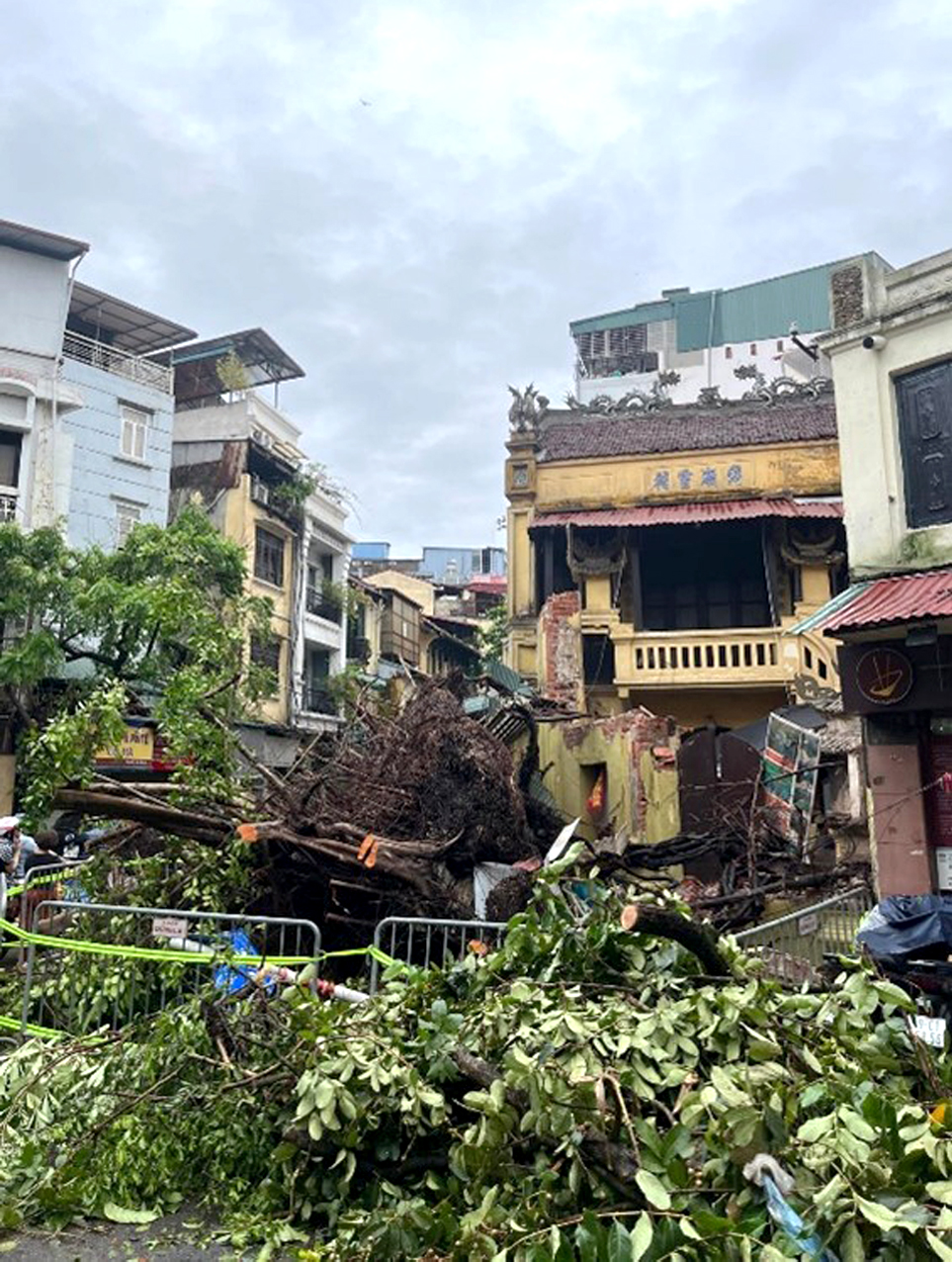
The aftermaths of the typhoon in Hanoi © SUSDEV
Exploring Hoa Binh: Our First Insights from the Field
As fieldwork unfolded, the carbon and biodiversity group explored the surroundings of Mai Châu, Đá Bia, Ban Sung and Cao Sơn and collected data from 18 different plots, across seven different land use land cover (LULC) types. It quickly became clear how the Hoa Binh province has the dual challenge of meeting economic demands and livelihoods while safeguarding the region’s environmental integrity. In recent years, the province of Hoa Binh and the entire northwestern Vietnam have experienced significant land use changes, particularly the conversion of forests to plantations. For the students, this meant trekking through remote areas, sometimes confronting leeches, to find plots classified as secondary forests or degraded evergreen broadleaf forests. The Carbon group, in particular, focused on understanding the drivers behind these land-use pressures. In this blog post, we’ll share key insights from our findings.
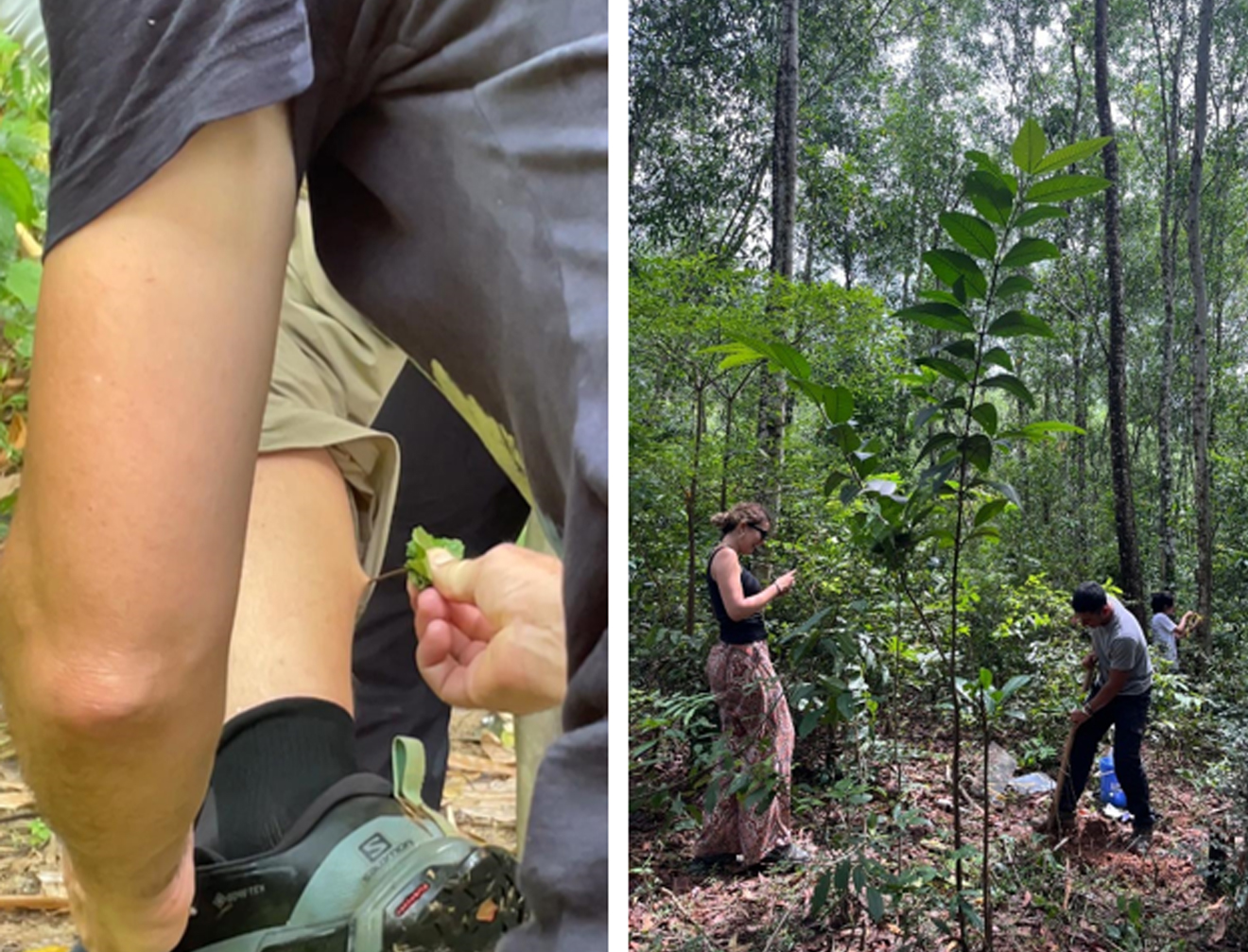
Some leaches in the fieldwork. Don’t worry, it doesn’t hurt! © SUSDEV
Rural livelihoods impact on LULC changes
Agriculture, specifically crop cultivation, remains the predominant source of income for the locals, and the slopes experience the most agricultural pressure. Here, wide forested areas have been converted into large plantations for coffee, rubber, pepper, and tea, and such transition is directly attributable to local activities and development policies. As is the case in many Southeast Asian countries, economic growth comes at the expense of tropical forest conversion and alterations in land use.
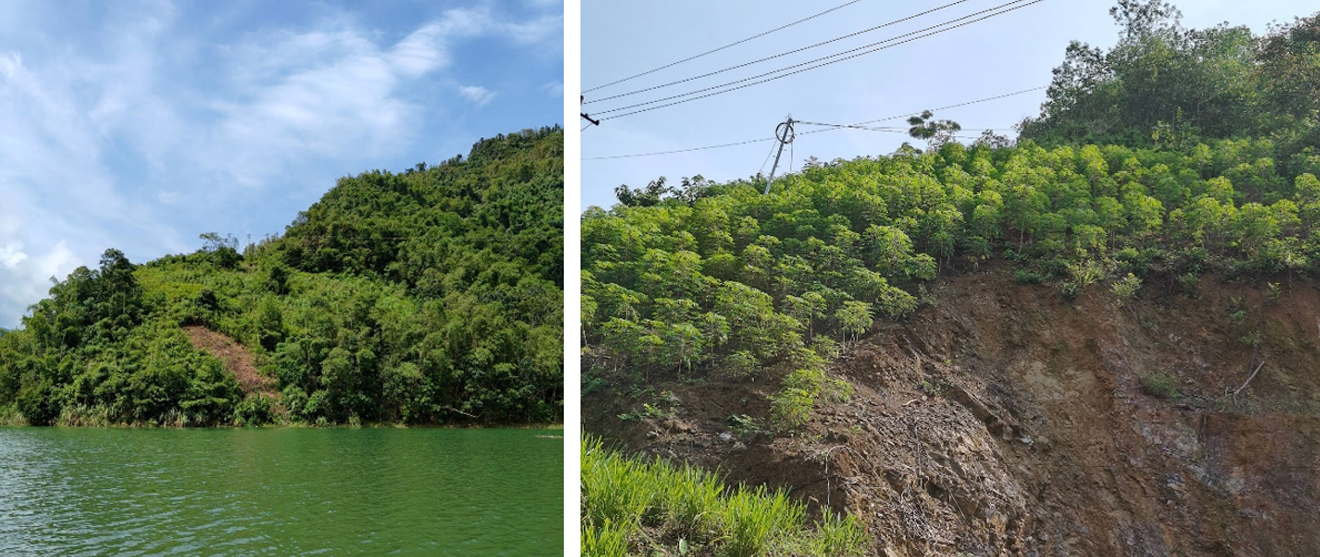
Plantations on the slopes © SUSDEV
Further analysis was then conducted to understand the drivers of land use changes. As previously mentioned, agriculture is the main rural livelihood strategy. However, it became clear during the fieldwork that although it plays a crucial role, tree plantations for the paper and pulp industry also contribute to land use changes (Chi et al., 2013). Especially relevant for the region is the development of pulpwood plantations, driven by the increased demand for wood for raw materials (Roda et Rathi, 2006) and pushed by Vietnam’s strategic position within the global trade scene, which makes it a known exporter of paper products. The pulp and paper industry’s growth in Vietnam has driven a significant increase in plantation forestry, particularly of Melia and Acacia species.
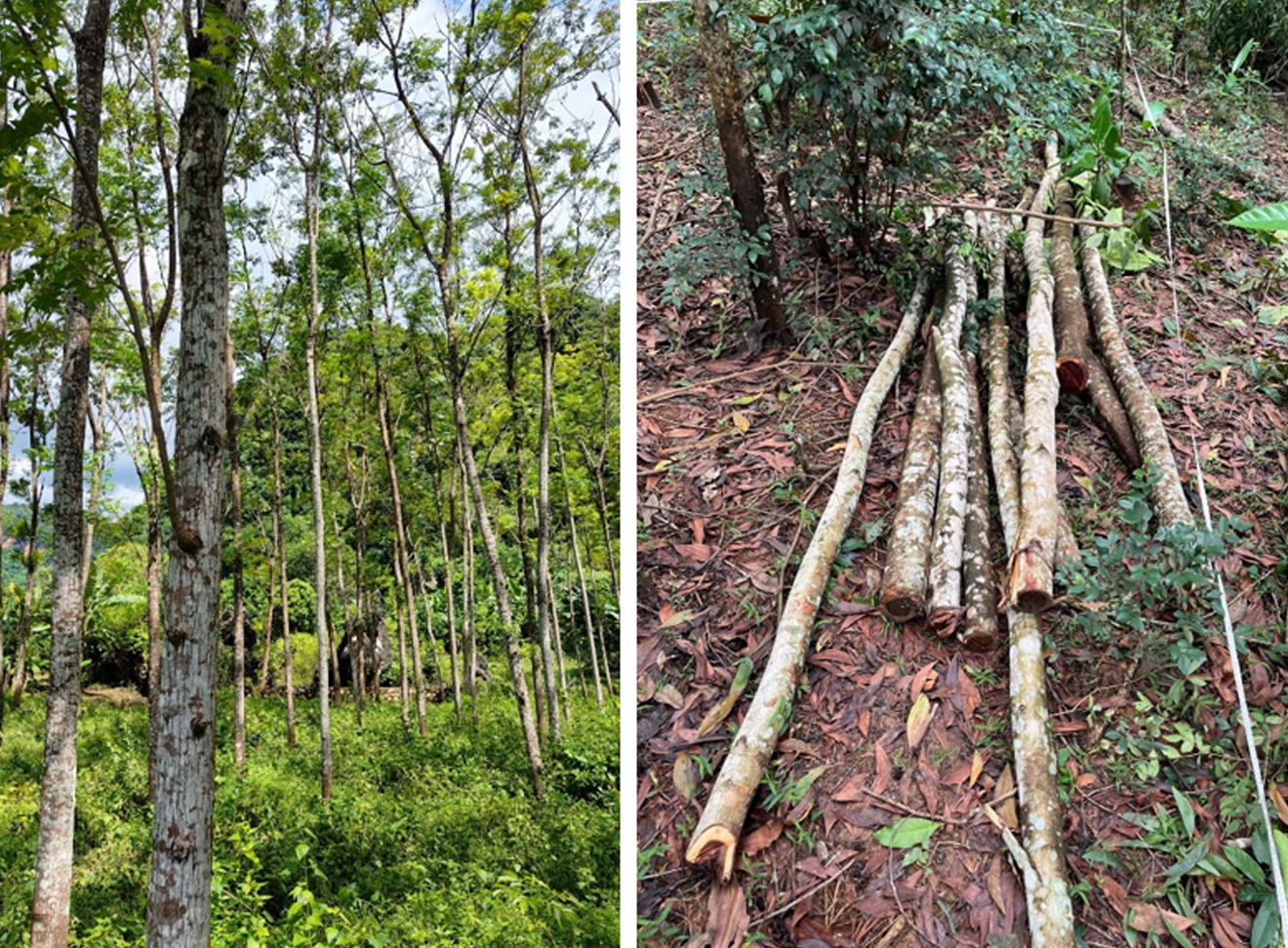
Tree plantations and premature logging © SUSDEV
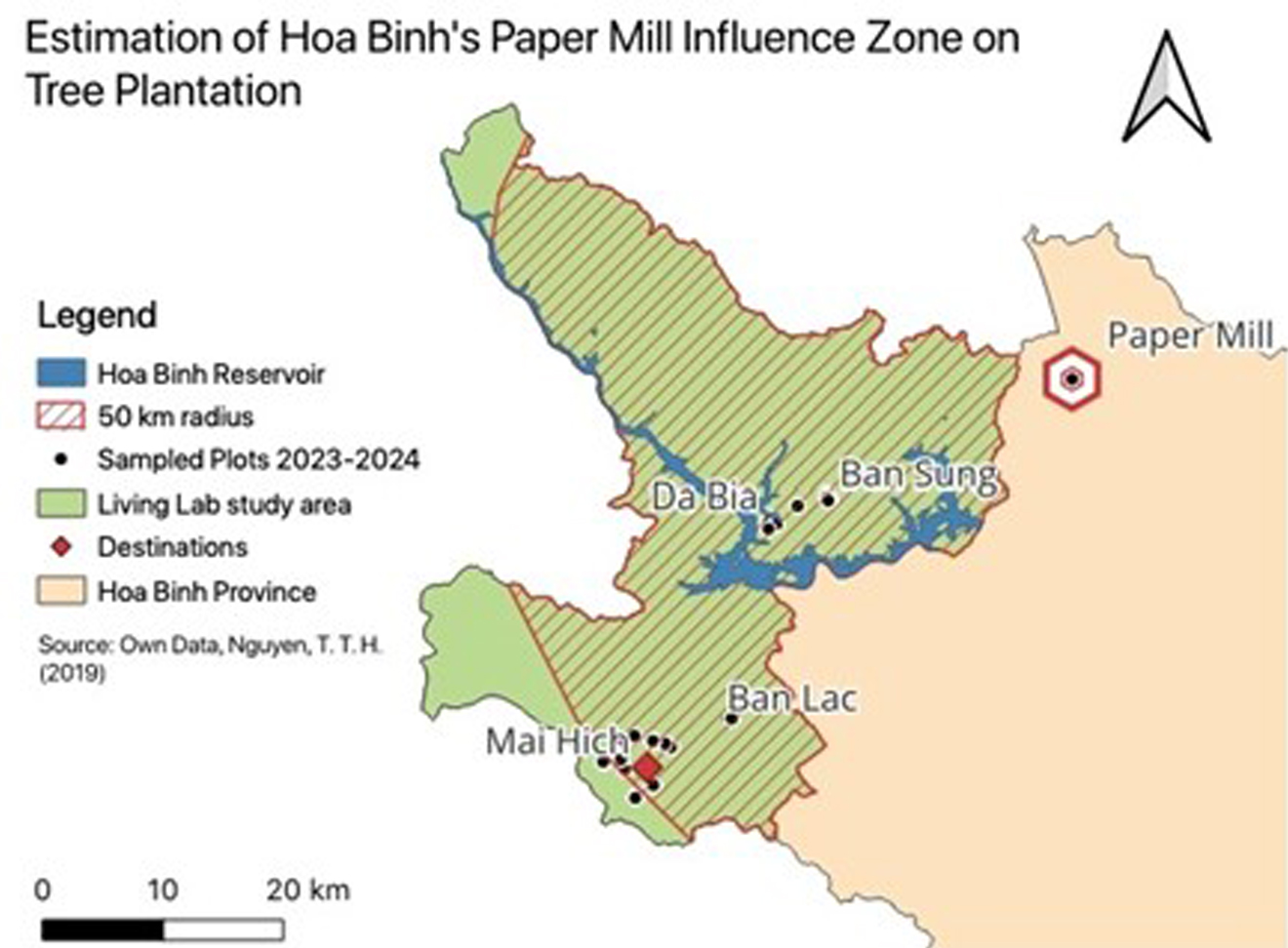
Influence of the paper mill industry in the living lab study area © SUSDEV
Questioning reforestation measures
While the entire country has transitioned from a deforestation status in the early 1990s to a reforestation one, the increase in forest cover is primarily due to plantation expansions, such as those of Acacia species (Zimmer et al., 2022). This raises an important question: do national reforestation efforts rely too heavily on a limited number of species, potentially posing environmental risks for biodiversity? Adding to this complexity, foreign actors, such as the German government, have supported plantation initiatives, including projects in five northern provinces of Vietnam (Herman et al., 2012). Similarly, many companies have participated in forest rehabilitation efforts in northern Vietnam, but much of this land has been allocated to supply raw materials for the pulp and paper industry (De Jong et Van Hung, 2006).
Although efforts are being made to ban illegal logging and promote reforestation and forest certification in Vietnam (Zimmer et al., 2022), our fieldwork in the northern uplands found visible evidence of land degradation and premature logging. The government tried to establish some options while actively promoting sustainable forestry practices, such as encouraging using FSC-certified wood or recycling paper. Over the past decades, it also implemented two significant reforestation initiatives: Program 327 (1992-1998) and the Five Million Hectare Reforestation Program, initiated in 1998 (Lang, 2002). However, the complex interactions between economic development and increased paper demand, forest management, and environmental concerns (Herman et al., 2012) shape the current scenario in Vietnam. Our findings reveal that paper demand accelerates short-term tree plantation cycles (Nambiar, 2021), leading to low carbon fixation, soil erosion, heightened hazard risks in certain villages and conflicts between local population needs and ecosystem restoration goals.
The mosaic landscapes of Hoa Binh
Beyond the highly dynamic changes in LULC, the fieldwork revealed how challenging it was to classify a 400m2 plot into a single LULC category. After a long day in the field, we were often confronted with the difficulties of classifying the plots of the day into a single category. For example, many plots exhibited features typical of tree plantations but also shared characteristics with secondary forests due to the presence of mixed vegetation. The landscapes of Hoa Binh revealed their mosaic-like nature, with diverse land covers often interspersed in small, fragmented patches.
Reforestation and rural livelihoods: challenges ahead
Our fieldwork in Hoa Binh highlighted the region’s complex balance between economic growth and environmental sustainability. The diverse land use types we studied showed us how tightly local livelihoods are linked to natural resources, and the nuanced challenges in managing these landscapes sustainably. Though reforestation and plantation efforts are underway, our findings revealed the need for more adaptive, community-centered approaches for a more sustainable development.
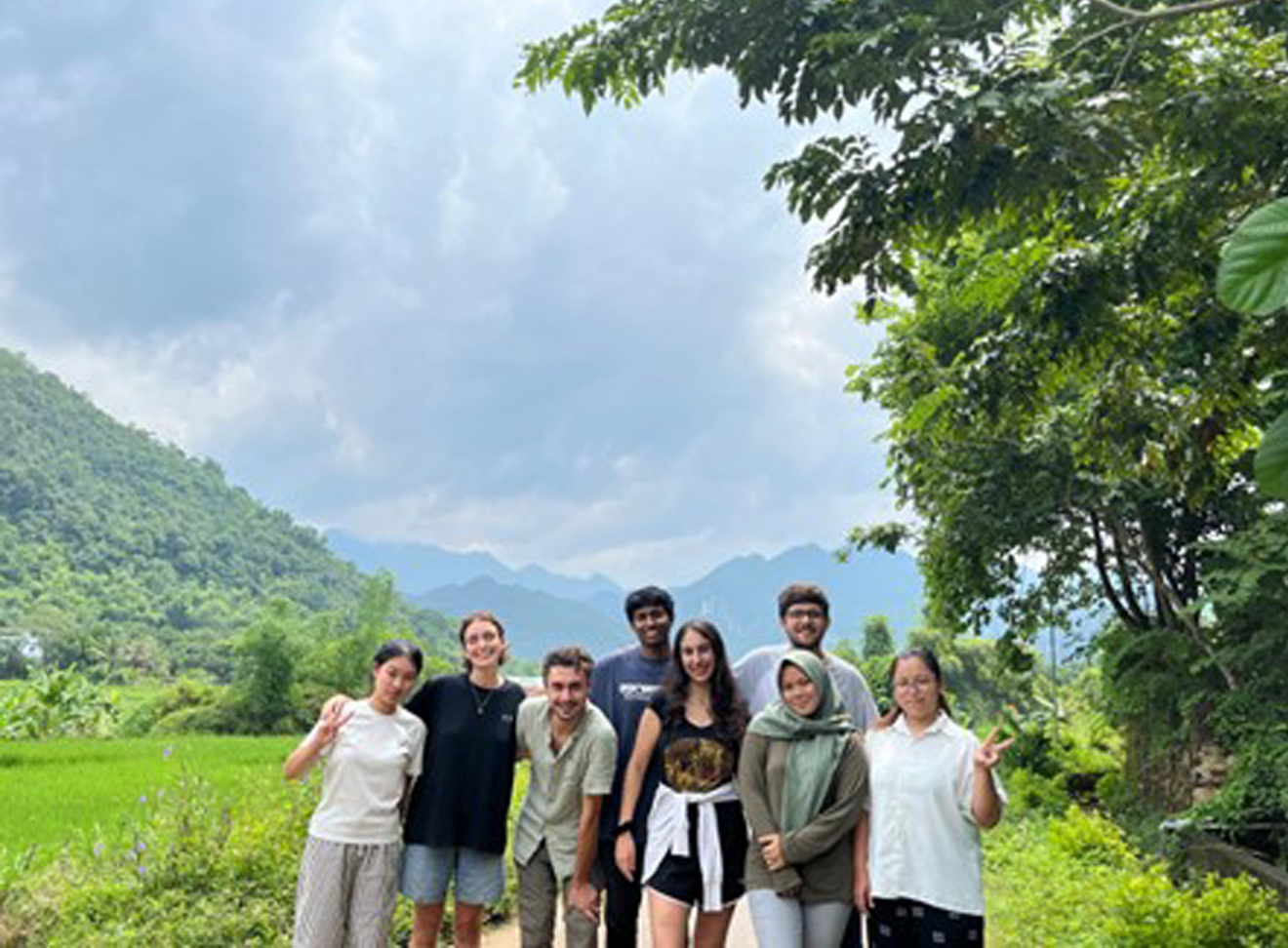
The Carbon dream team!! © SUSDEV
References
Chi, V. K., Van Rompaey, A., Govers, G., Vanacker, V., Schmook, B., & Hieu, N. (2013). Land Transitions in Northwest Vietnam: An Integrated Analysis of Biophysical and Socio-Cultural Factors. Human Ecology, 41(1), 37–50. https://doi.org/10.1007/s10745-013-9569-9
De Jong, W., & Van Hung, T. (2006). Forest Rehabilitation in Vietnam: Histories, Realities, and Future: Histories, Realities, and Future. CIFOR.
Herman, H., Yasuyuki, K., & Phuong, L. X. (2012). From Plantation Forestry to the Pulp and Paper Industry: A Case Study of Vietnam. https://www.researchgate.net/publication/281522821_From_plantation_forestry_to_the_pulp_and_paper_industry_A_case_study_of_Vietnam
Lang, C. (2002). The Pulp Invasion – Vietnam. Published by WRM. Retrieved October 19, 2024, from https://chrislang.org/2002/12/01/the-pulp-invasion-vietnam/
Nambiar, E. S. (2021). Strengthening Vietnam’s forestry sectors and rural development: Higher productivity, value, and access to fairer markets are needed to support small forest growers. Trees, Forests and People, 3, 100052.
Roda, J.-M., & Rathi, S. (2006). Feeding China’s expanding demand for wood pulp: A diagnostic assessment of plantation development, fiber supply, and impacts on natural forests in China and South East Asia region : Malaysia report (Malaisie). CIFOR. https://agritrop.cirad.fr/543357/
Zimmer, H., Tran, L. D., Dang, T. T., Le, T. H., Lo, Q. T., Minh, D. L., & Nichols, J. D. (2022). Rehabilitating forest and marginal land using native species in mountainous northern Vietnam. Trees, Forests and People, 10, 100323. https://doi.org/10.1016/j.tfp.2022.100323