
A challenging long-distance collaboration: Lessons from Vietnam Alternative Living Lab
By Javiera König Lopez, Nyambura Njoroge, Caroll Mewa Fotso, Lucia Von Borries, Derya Ezgi̇ Kütüker, Laura Balcazar Santo
General description
In the fluctuating weather of Leuven, nonchalantly revealing the fall season, we got involved in the Alternative Living Lab and its variety of environmental challenges regarding the study area of Hoa Binh, Vietnam. Our remote work consisted of tasks ranging from mapping landslides in the mountainous regions of Hoa Binh, Vietnam, to assessing water quality impacted by human activities like tourism and farming. Despite technical challenges, such as difficulties with mapping software and distinguishing landslides from degraded farmlands, we gained valuable insights that pertain to the patterns of environmental degradation and the effects of infrastructure development on the land. In addition to these field tasks, transcribing focus group discussions was a particularly enlightening experience. These discussions, centered on climate-related risks following a major typhoon, gave us a deeper understanding of not only the environmental challenges but also the community’s perspectives. Hearing firsthand from those directly affected by these issues highlighted the significant potential of our research to address real problems.
“Helping my group with desk work was challenging mainly due to the time difference, but I was able to improve my academic skills in literature review and editing, and the interview with Dr Dinh, an expert in natural hazards, especially in landslides, provided real-world insights into disaster management.” – Derya.
It also made us more aware of the delicate balance between using the living lab as a learning opportunity and recognizing the community’s expectations for meaningful engagement from universities. This raised important ethical questions about how research should be conducted in disaster-affected areas without adding to the community’s distress. These reflections will undoubtedly shape our approach to future projects. While working on other tasks, such as summarizing past reports and assisting our thematic groups, we also encountered logistical difficulties, including time zone differences and technical delays. Yet, through these challenges, we learned the importance of communication, adaptability, and thoughtful consideration of both the environmental and social aspects of our work.
“Keeping up with own group remotely proved to be the major challenge in my case, particularly because the climatic conditions on the field made it impossible to maintain our action plans: sampling wild pollinators is impossible under heavy rain forecast…” – Javiera.
Overall, the Alternative Living Lab offered a transformative experience, deepening our understanding of sustainability, community engagement, and the ethical dimensions of research in vulnerable regions.
Learnings
Water assessment:
Working on the water quality assessment exercises was a great learning experience, especially for those of us with no prior knowledge of biological research. We were tasked with analyzing lab test results of water samples, with the help of detailed explanations through videos and readings. One topic we studied was eutrophication, , a process where excess nutrients, often from human activities like farming, lead to an overgrowth of algae in water bodies. As the algae die and decompose, oxygen in the water is depleted, making it difficult for other species to survive. Through these exercises, we also explored how different parts of aquatic ecosystems, , such as phytoplankton, zooplankton, macroinvertebrates, and fish are interconnected. Although the lack of a biology background made the concepts challenging at first, the effort was worthwhile. It made tangible how human actions and climate change are disrupting the balance of ecosystems, causing effects like trophic cascades which occur when changes at one level of the food web, , such as a decline in predator fish, , cause a ripple effect and affect species numbers on other levels. This project not only taught us about water ecosystems but also gave us practical insight on on how to analyze and identify environmental issues critically and systematically.
Mapping landslides:
In the landslide identification assignment, we worked with satellite images to identify landslides in Hoa Binh Province using Google Earth Pro. At first, distinguishing landslide areas from agricultural sites took a lot of work. However, working as a group helped overcome this problem. We learned together that comparing images from different years helps understanding the difference between two sites. This exercise not only improved our analytical skills with satellite data but also sparked a keen interest in using such data for research. Additionally, through the careful yet tedious process of manually tracing landslides, we learned the value of efficiency over excessive detail. This experience taught us that while accuracy is vital, maintaining productivity and ensuring standards are equally crucial in lengthy, time-intensive tasks, such as landslide identification.
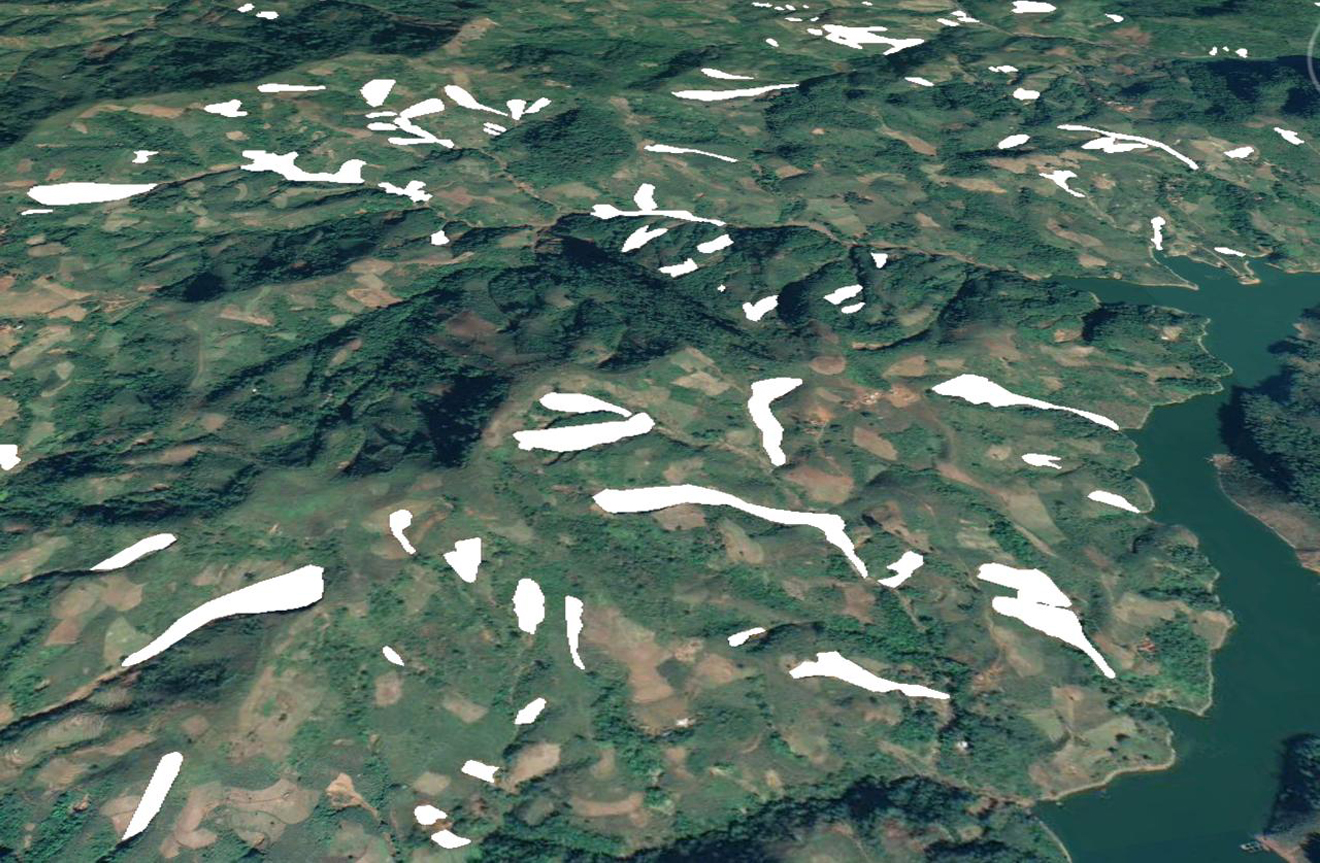
Landslide Identification in Hoa Binh Using Google Earth Pro© SUSDEV
“Mapping landslides showed how closely nature and human activity are connected. Telling landslides apart from areas damaged by farming was challenging and highlighted the impact of land use. Many landslides followed natural slopes, but nearby roads and construction also seemed to play a role.” – Laura.
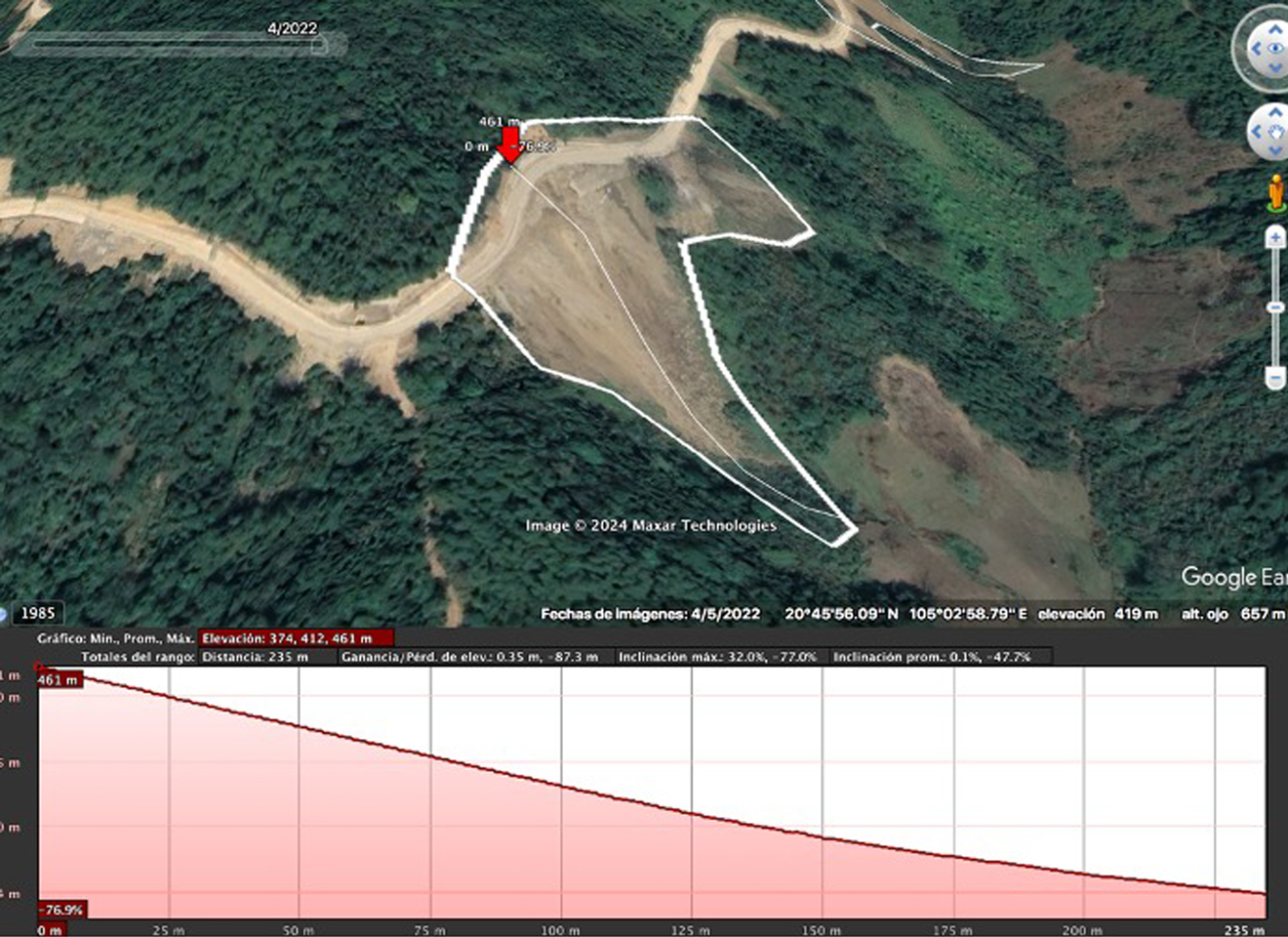
Landslide Identification in Hoa Binh Using Google Earth Pro © SUSDEV
Briefs on past reports:
As a group, drafting research briefs based on last year’s reports allowed us to approach the material with fresh perspectives. We worked individually to break down complex reports into concise, clear briefs, while still collaborating as a team. This process required us to critically analyze the original research, extract the most valuable information and present it in an easier format. Through revisiting the reports, we got a new way to engage with research that also allowed us to evaluate the quality of their research in a way that felt distinct from reviewing external sources. This process highlighted the importance of revisiting and refining research and the challenge of summarizing key insights while maintaining the original work’s essence.
Transcriptions
This activity was quite enriching, giving us a brief overview of the environment and development group, and the Society and development group discussions with their focus group. While being offsite, the transcription of the records provided by our colleagues in Vietnam was carried out by our group members and delivered on time. This contributed to data collection and analyses of results done by the groups onsite and gave us an overview of the focus group fieldwork. Particularly interesting as it involved the local community responding in the local language. However, the aid of the translators made the work easier despite some incomprehension.
General experience
We embarked on Living Lab Leuven with uncertain expectations. It was a relief that our professors ensured our active participation in the research process for the group that did not join the fieldwork. Coordinating tasks, managing deadlines, and adapting to unforeseen challenges provided a real-world experience of field research. The collaborative nature of the project, despite the time zone differences, fostered a sense of teamwork and camaraderie.
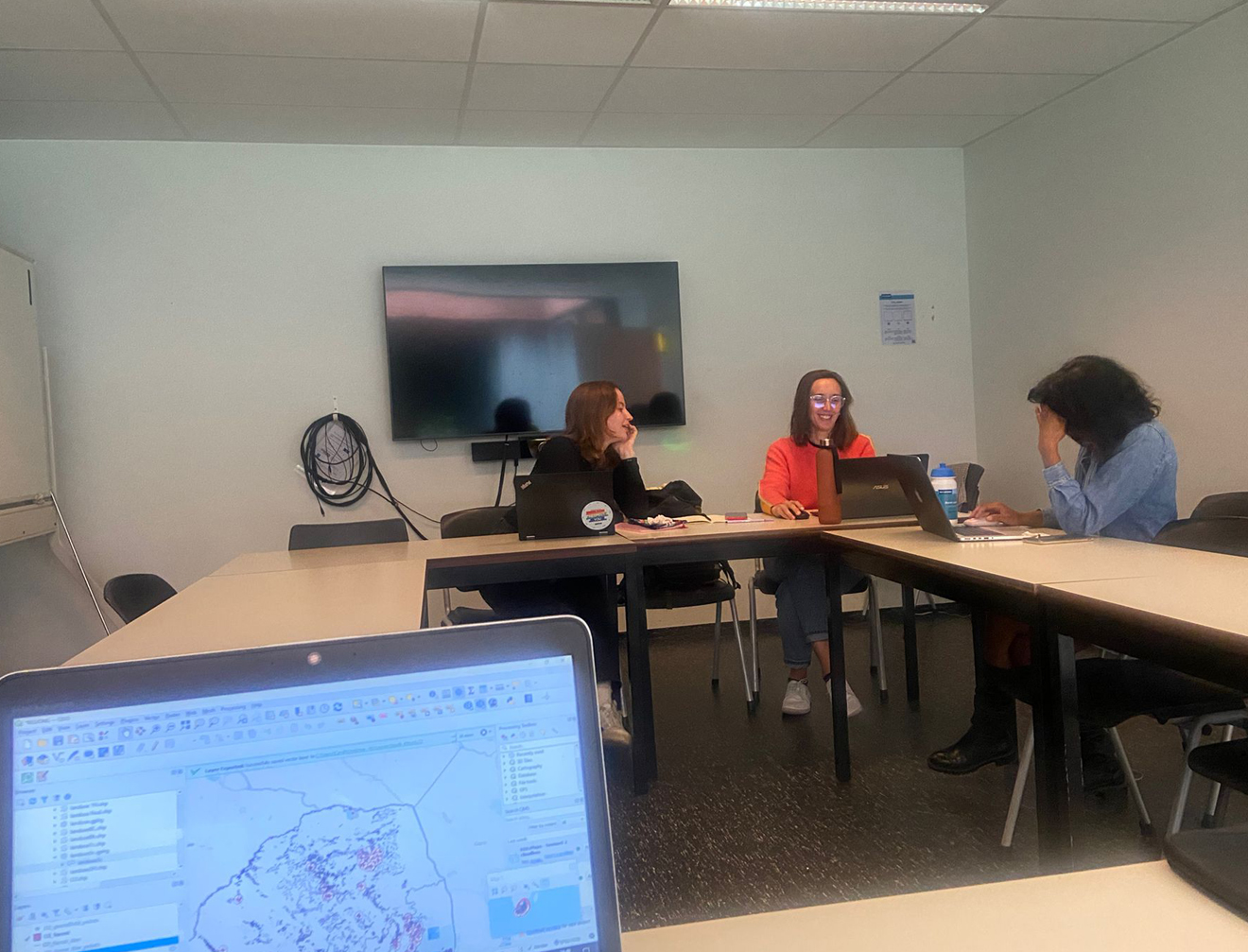
Alternative Living Lab Group studying in Leuven by Caroll Mewa FOTSO © SUSDEV
“I was fortunate to collaborate with a dedicated team that made the experience productive despite the difficulties in maintaining effective communication with the onsite group, as a result of network connectivity and time constraints.” -Caroll.
While we faced challenges in task distribution and time management, we learned the importance of clear communication and realistic self-assessment. Overall, Living Lab Leuven was a valuable learning experience, teaching us the value of flexibility, adaptability, and teamwork.
“The topic of our group had to be completely changed on site, and this evolution was difficult to follow from a distance. The learning outcome is that, once again, agility and flexibility is a central skill to be developed and trained, because you can never fully plan how a field project will unfold.” – Javiera