
Land Group
By Beatriz Duke Vitien,Koko Nomura, Nienke de Rijk, Lucas Switsers de Roeck, Martin Raphael Advincula
MARTIN –
The value and purpose of the living lab
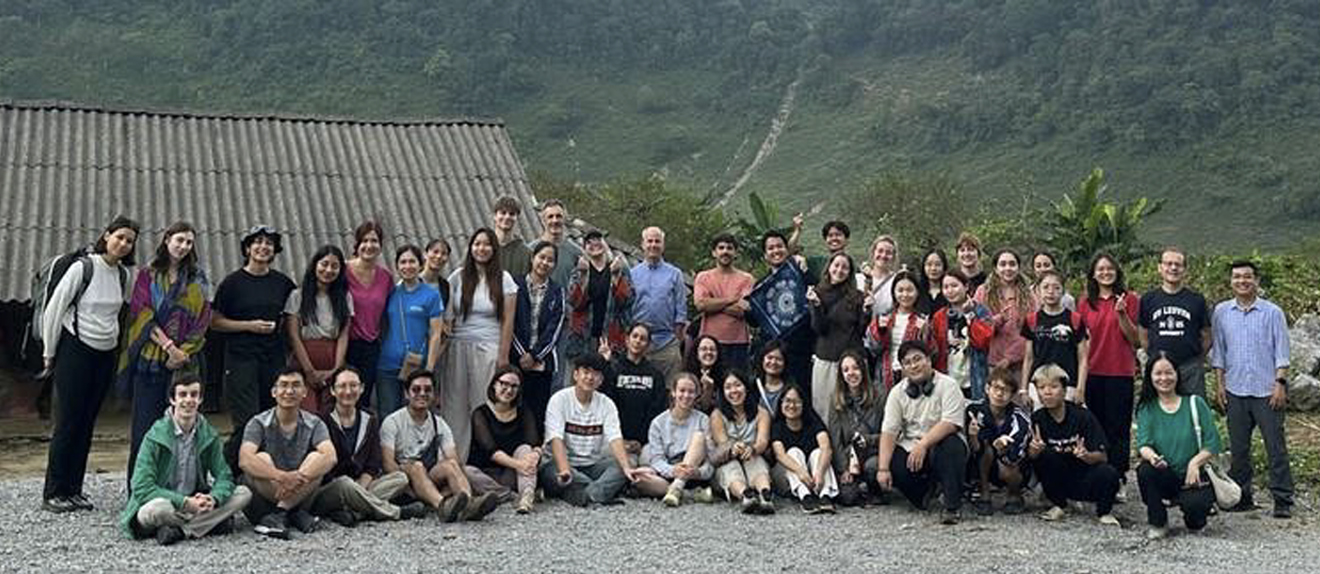
The Living Lab is an unique immersive field course that is designed to connect students with real- world sustainability challenges in the Global South. I t emphasizes the interconnectedness of human and environmental systems, fostering crit ical thinking across disciplines and creating an interdisciplinary perspective merging social sciences and ecology. The Living Lab provides an opportunity for students to apply theoretical knowledge to pressing global issues, addressing the complexities of socioeconomic inequalities, environmental degradation, and sustainable development . By confront ing these challenges, students are encouraged to think holistically and develop innovative, context – specific solutions that promote long- term sustainability and empowerment .
NIENKE –
Results so far
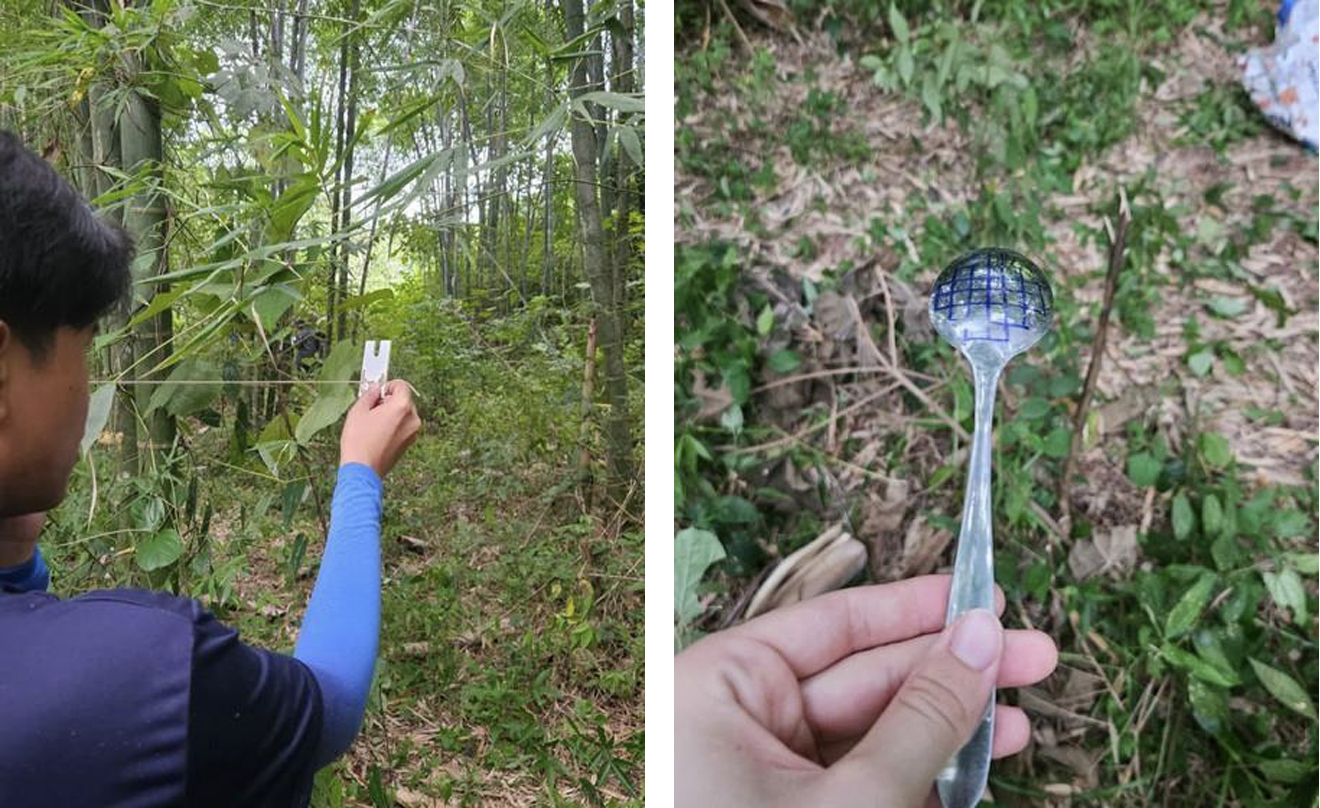
This year, our land team worked across ten f ield s i tes in Vietnam, focusing on the diverse landscapes of Mai Hich and Hang Kia to understand how different land uses influence both biodiversity and carbon storage. Using the Shannon- Wiener Diversity Index, we found that primary forests remain the most diverse ecosystems, support ing a rich variety of species, while croplands and degraded areas show far lower diversity. Interest ing is that NMDS analyses revealed clear regional differences in plant composition, Hang Kia and Mai Chau host distinct communities, while Mai Hich showed wide variation between species- rich and species- poor plots, offering potential for targeted restoration efforts.
In parallel, our carbon assessments measured aboveground, belowground, and deadwood pools, with soil carbon data still being processed. The results so far show that forests and plantations store the most carbon, bamboo systems fall in the middle, and shrublands and croplands retain very little. When we l inked these findings with biodiversity data through cluster analysis, Hang Kia stood out as a hotspot for both high biodiversity and high carbon storage, an important area for conservation, while degraded lands with low values in both indicators point to restoration opportunities.
Altogether, these results reinforce how maintaining healthy forest ecosystems supports both climate goals and local livelihoods. Diverse and carbon- rich landscapes improve soil fertility, reduce landslides, and safeguard water quality, while unsustainable land-use changes continue to threaten these benefits. Our next steps include analyzing soil carbon, assessing functional biodiversity, and refining land- use classifications to guide evidence- based strategies for sustainable management and climate resilience.
KOKO –
OUTRO
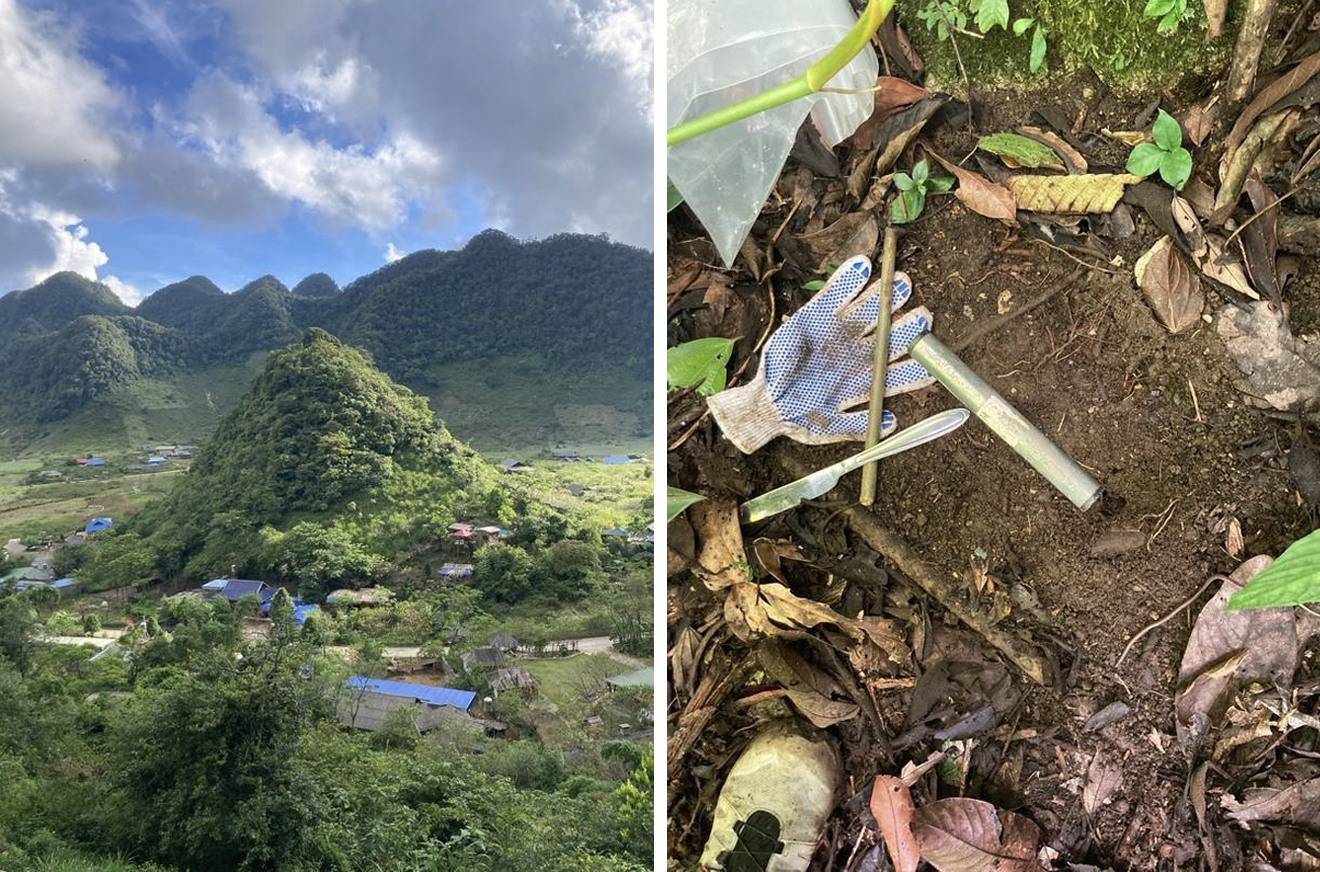
Our research in Mai Chau and Hang Kia highlights the importance of understanding sustainable development as a multifaceted issue involving an interconnected system of drivers, actors, and processes. Specifically, our research questions require us to consider three main components – carbon sequestration, biodiversity conservation, and the livelihoods of the local community – and how they interact with one another as well as the trade-offs and synergies arise between them. Given the place-specific nature of environmental and land use challenges, it becomes more and more evident that one blueprint method for sustainable land use management does not exist. Rather, local ecological, social, and economic contexts must be investigated and continuous adaptations must be applied over time.
All in all, the Living Lab experience in itself was an exploration of how scientific inquiry, combined with understanding of local contexts and support from communities, can lead to the development of innovative solutions which serve multiple goals simultaneously.
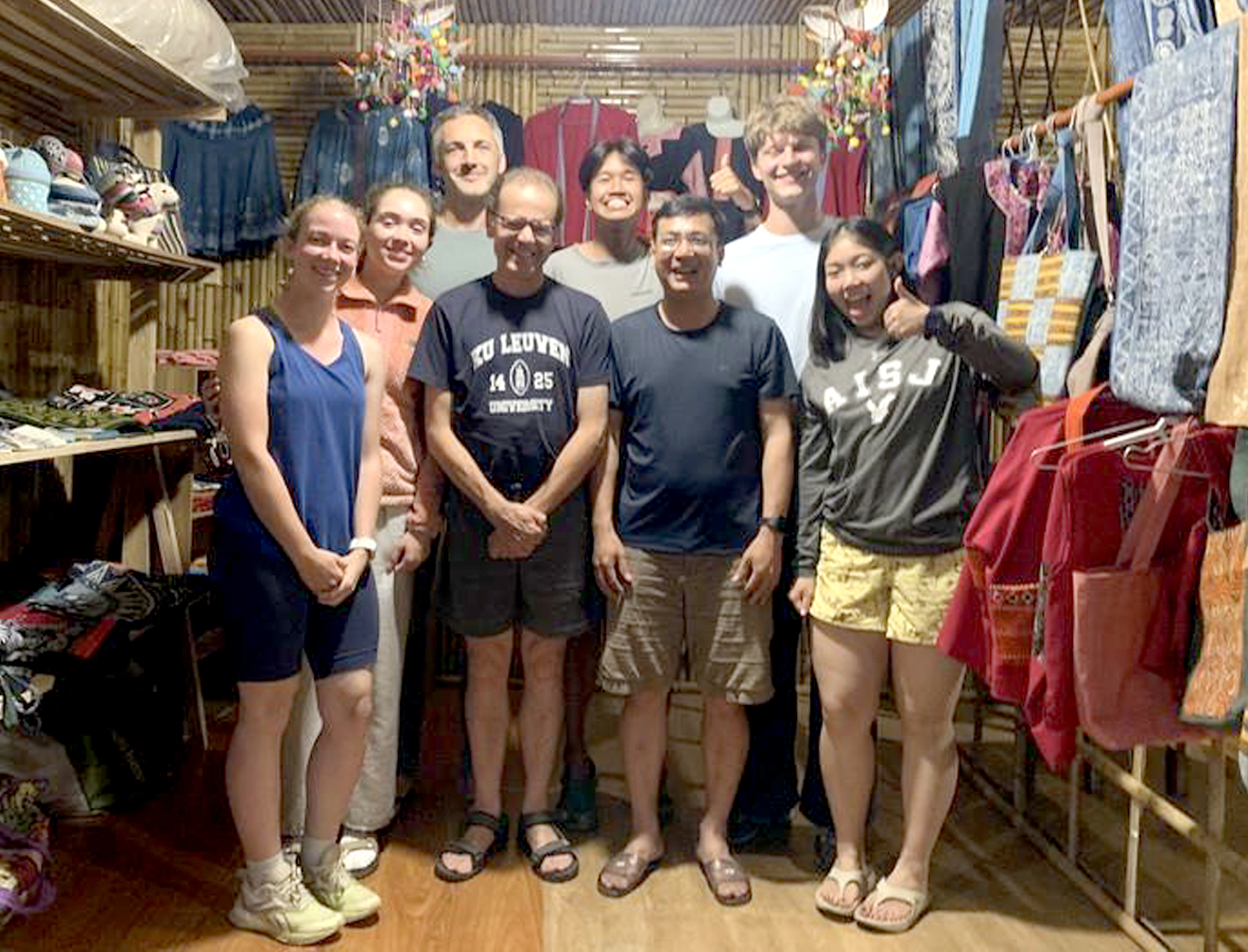
Climate change in its essence is a social issue. It is a macro phenomenon, perpetuated by a system that steers society into the direction of exploitation and consumption. Solutions to mitigate this pantheon of an issue must therefore be of social nature. This includes multi-disciplinary, multi-stakeholder and multi-cultural holistic thinking. Our team consisted of five people with four different nationalities, with three different backgrounds. Safe to say our group embodied this essential paradigm. Through patience and open-mindedness, we learned to collaborate in an efficient and respectful way. This led to the acquisition of great results and a wonderful experience in general. (Also a special shout-out to professor Bruno and Filip for their contagious passion and enthusiasm, and an even more special shout-out to Dr. Binh In, whose extensive plant and tree species knowledge helped us identify the located species.
Vietnam: a personal narrative
“Move. As far as you can, as much as you can. Across the ocean, or simply across the river. Walk in someone else’s shoes or at least eat their food.” – Anthony Bourdain
There I was, walking in the rice fields of people I had never met before. They didn’t even know my name. Despite the fact that I was a complete stranger, they allowed me to walk with them through the arable land on which they work 12 months every year and get their livelihood from. Our translators asked permission and without second thought they happily agreed. Now imagine this situation in a European country. Chances are you would get an annoyed look and be semipolitely sent away without any regards. This cultural canyon is what stuck with me the most. The warmth of the Vietnamese people is something very special to me. Just raw acceptance. A trait that becomes increasingly rare. I’m very grateful to have experienced these wonderful 3 weeks!! LUCAS.
The Living Lab was one of the main reasons I chose to pursue this degree… and it exceeded all expectations. I can confidently say that the 2 weeks we spent in Vietnam were truly a once-in-alifetime experience. From the pristine forests we explored on land sampling days to the local students and hosts we interacted with, I was constantly reminded of why I chose to pursue my studies in sustainable development. I think this must have been a collective thought between my colleagues as well, as we uncovered the beauty in the co-existence of nature and people. The pure warmth and openness of the Vietnamese communities we encountered throughout the trip is something I will carry with me forever. KOKO.
The thought of doing fieldwork with the Land team was enough to daunt anyone: hiking through dense forests, using technical methods to collect samples, while sweating it out under the tropical sun. As one of the few with previous fieldwork experience, it was a challenge to guide my classmates, especially when many of whom were stepping into the field for the very first time. But with the support of my colleagues and supervisors, we pushed through and uncovered fascinating findings! It reminded me that collaboration is key in research, as we built on the work of past teams to carve our own path. After nearly three years away from tropical forests, the Living Lab allowed me to return to my natural habitat. It reignited my purpose as a tropical forester: to preserve these forests for future generations, keeping them as vibrant and awe-inspiring as they are today! MARTIN.
I spent most of the field days sick with a stomach bug, but I managed to join the Land team for forest plot sampling. The conditions were challenging: an 85% slope that got slippery when it started raining, but working in plots with stunning views made it worthwhile. I learned a lot, especially while sorting through leaf samples to identify which came from trees. This was where the carbon-biodiversity connection I’d been studying became tangible rather than theoretical. As someone focused on the social side of sustainable development, being in that forest clarified something important: these ecosystems aren’t just ecological abstractions. They’re directly tied to livelihoods through food production, landslide prevention, and resource provision. The fieldwork bridged my understanding between environmental processes and human needs in ways that desk research never could. BEATRIZ .
The Living Lab was truly an incredible experience, one that I’ll carry with me for a long time. I’m so happy I decided to go! It was my first time traveling outside of Europe, and while that felt a little intimidating at first, I knew it would be worth it. Sustainable Development is all about understanding global perspectives, and this trip was a must for me! Arriving in Vietnam felt like stepping into a completely new world and there was so much to take in! The preparation day before our fieldwork was a relief; it helped calm my nerves and get me ready for what was to come. When the first real sampling day arrived, I was team leader, and to my surprise, I felt confident, capable, and proud of how far I’d come. But beyond the fieldwork, what I loved most were the people. My classmates, the staff, and especially the Vietnamese students. Everyone was so kind, generous, and genuinely welcoming. They made me feel like I belonged, and that sense of connection made the whole experience even more meaningful. The Living Lab reminded me why I chose Sustainable Development in the first place. It confirmed that this is exactly the path I want to follow. I left Vietnam with new skills, new friendships, and full of gratitude. Cảm ơn! X Nienke.
References for intro:
Oliver, T. H., Heard, M. S., Isaac, N. J. B., Roy, D. B., Procter, D., Eigenbrod, F., Freckleton, R., Hector, A., Orme, C. D. L., Petchey, O. L., Proença, V., Raffael li, D., Suttle, K. B., Mace, G. M., Martín- López, B., Woodcock, B. A., & Bullock, J. M. ( 2015 ) . Biodiversity and Resi lience of Ecosystem Functions. Trends in Ecology & Evolut ion, 30 ( 11 ), 673 – 684 . https:// doi. org/ 10 . 1016 / j . tree. 2015 . 08 . 009