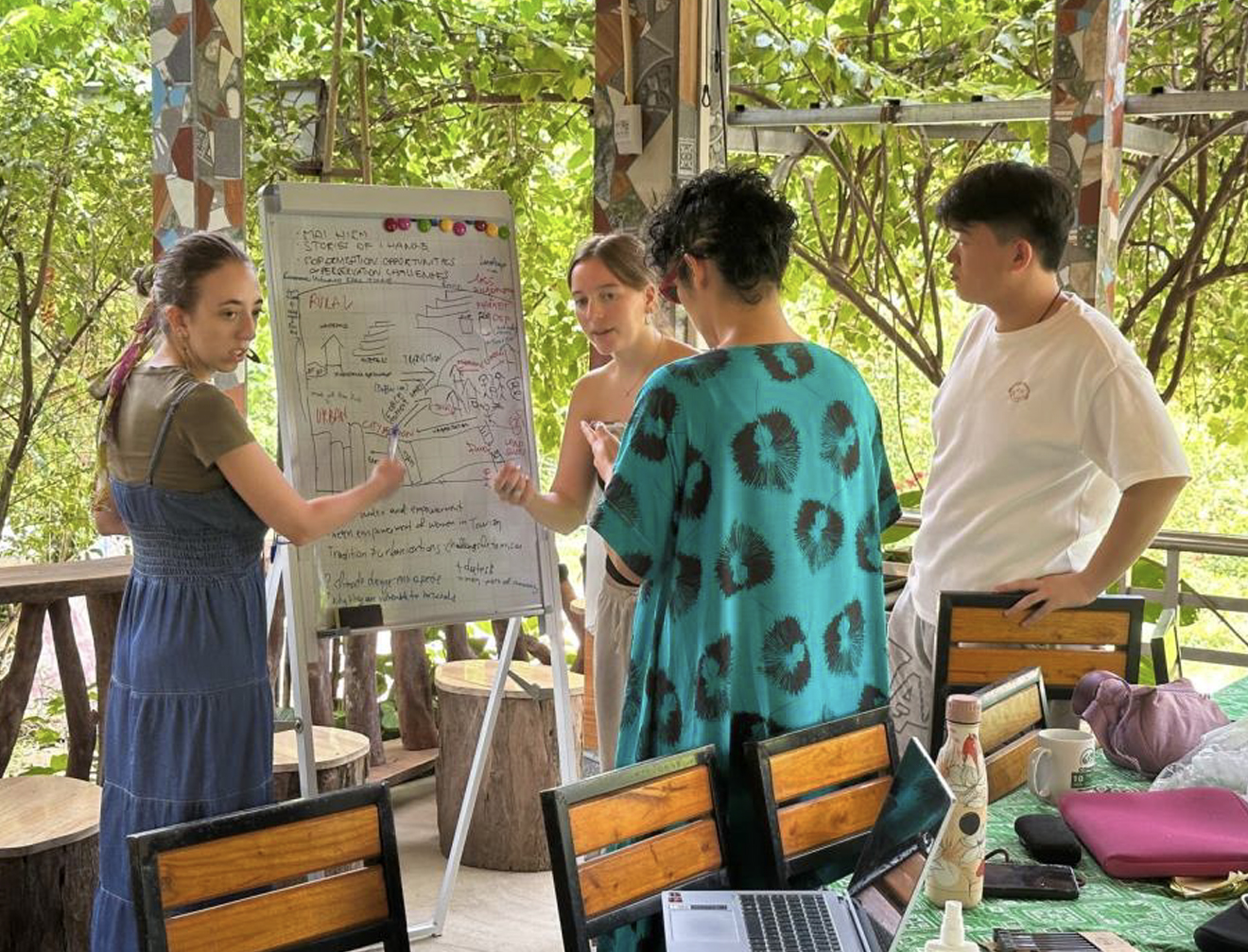
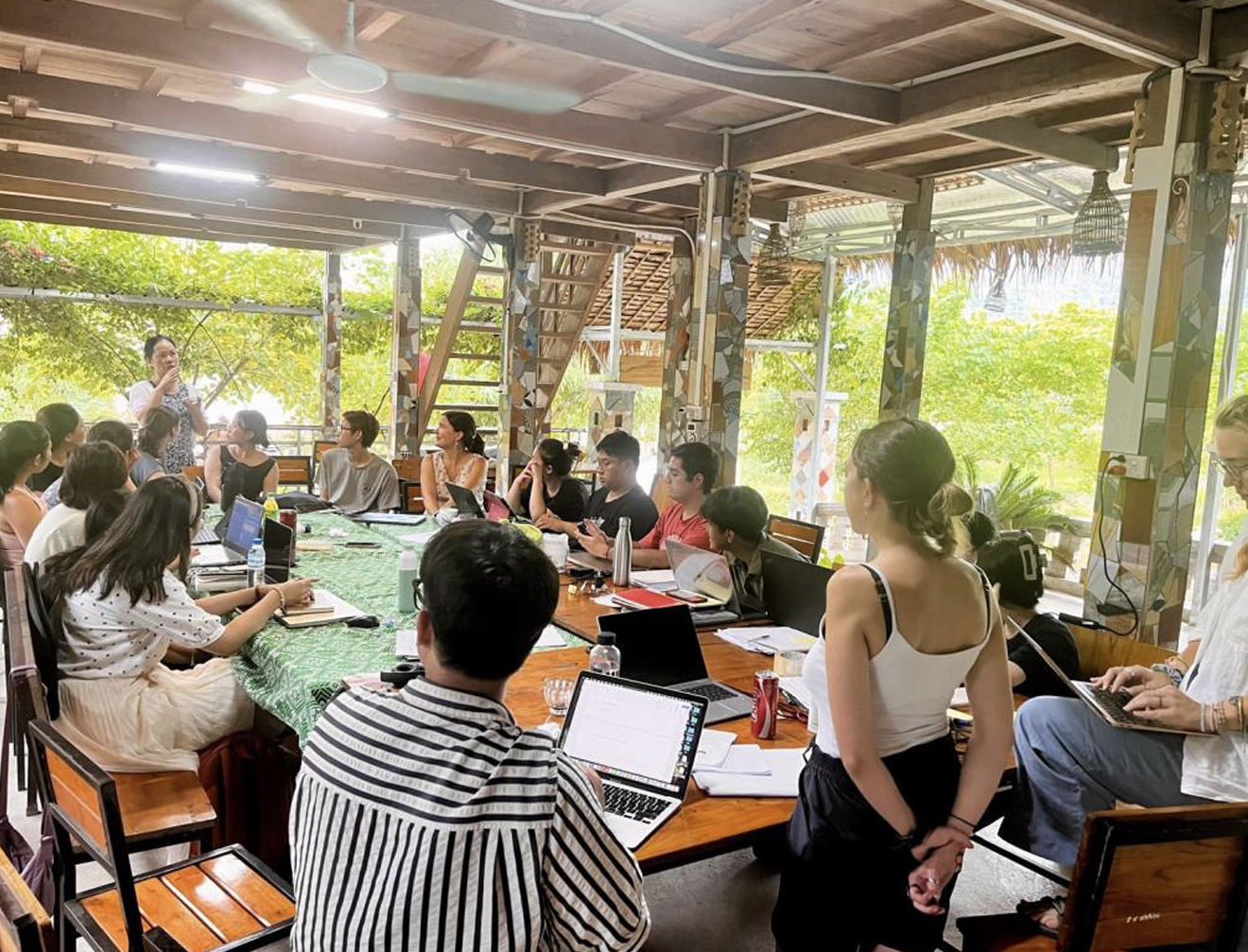
Society & Environment Group
By Katsigianni Pinelopi, Van Gorp Stien, Lambert Lola, de Bernard de Fauconval de Deuken Alice, Dahlberg Annie, Zhang Boxiang
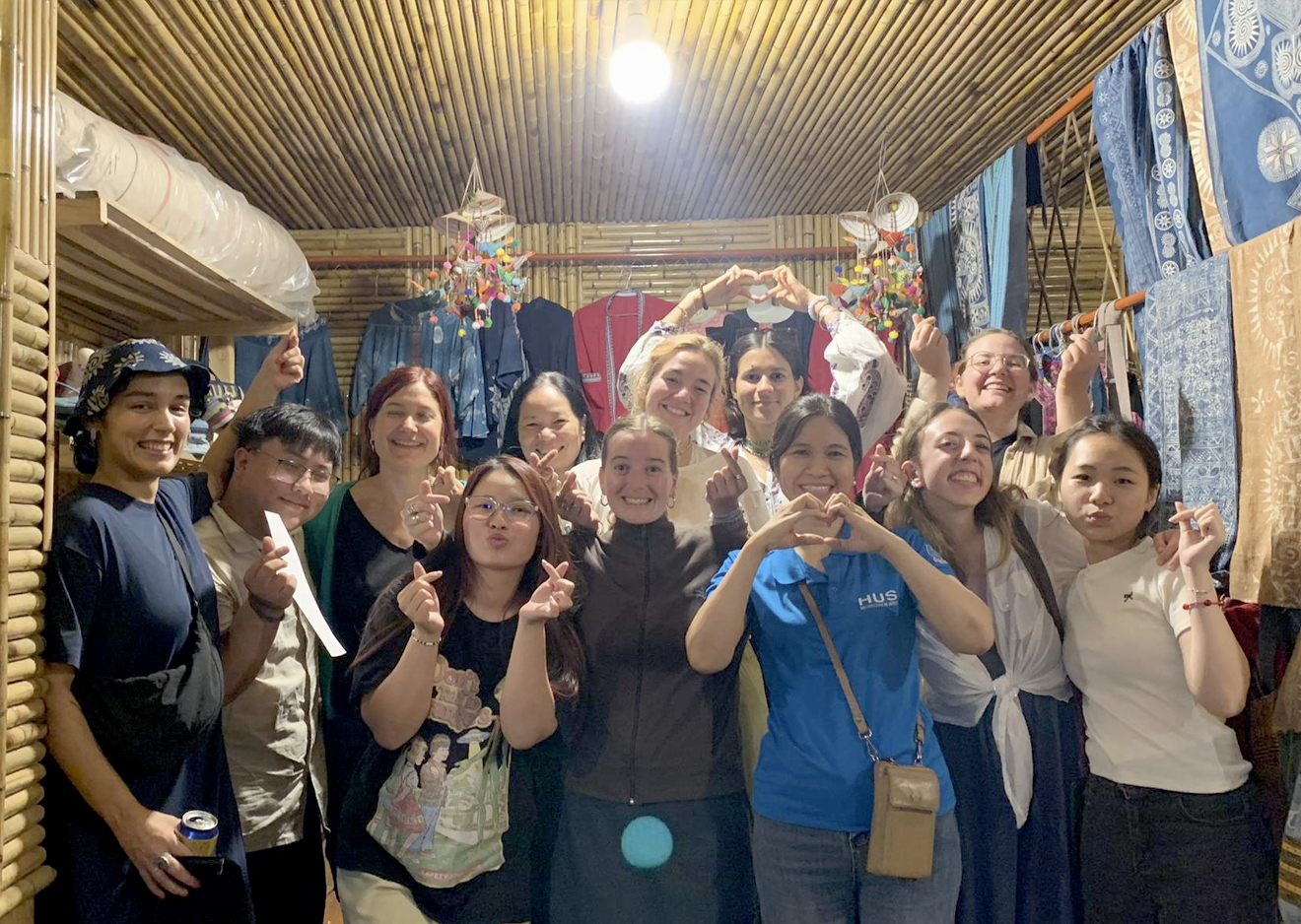
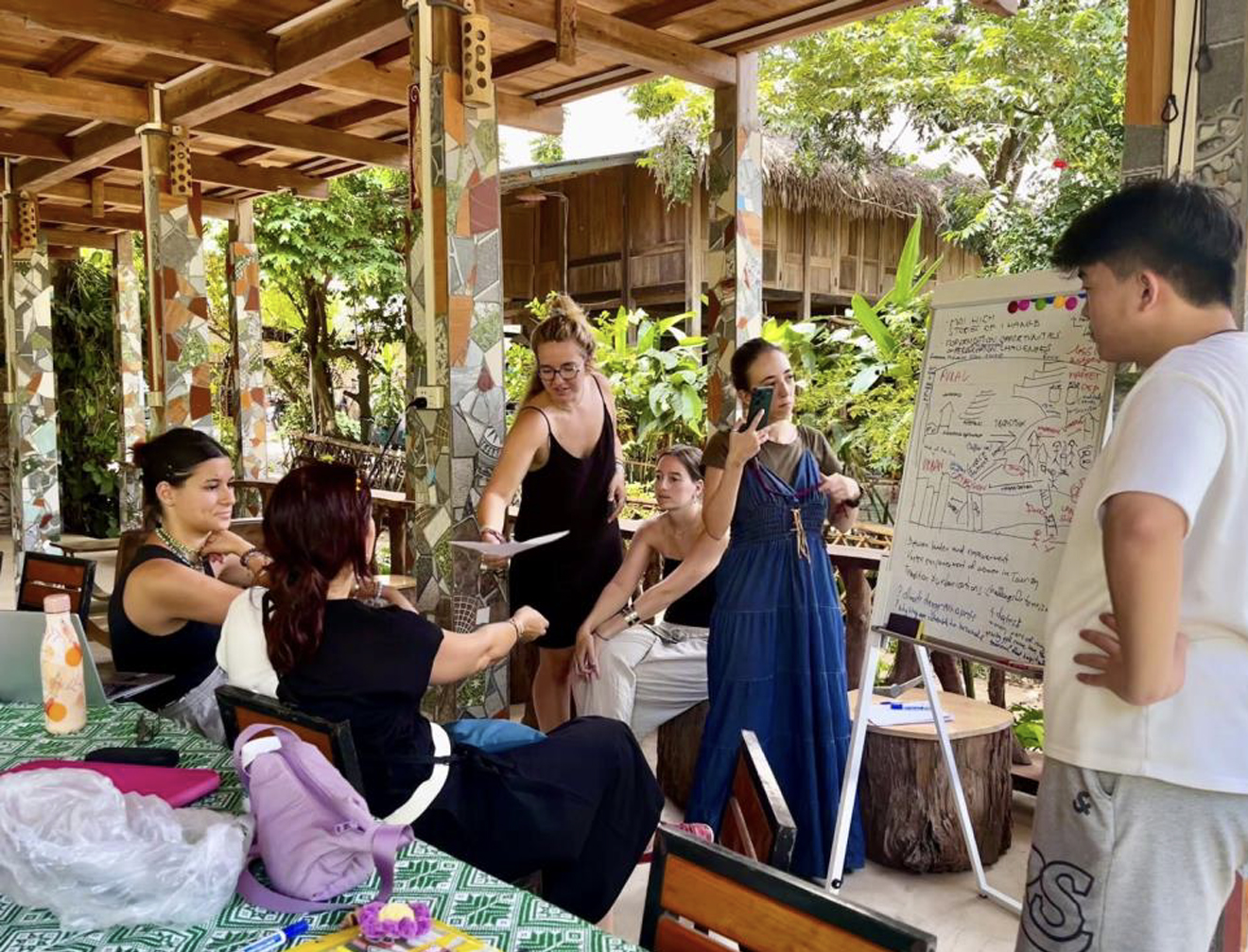
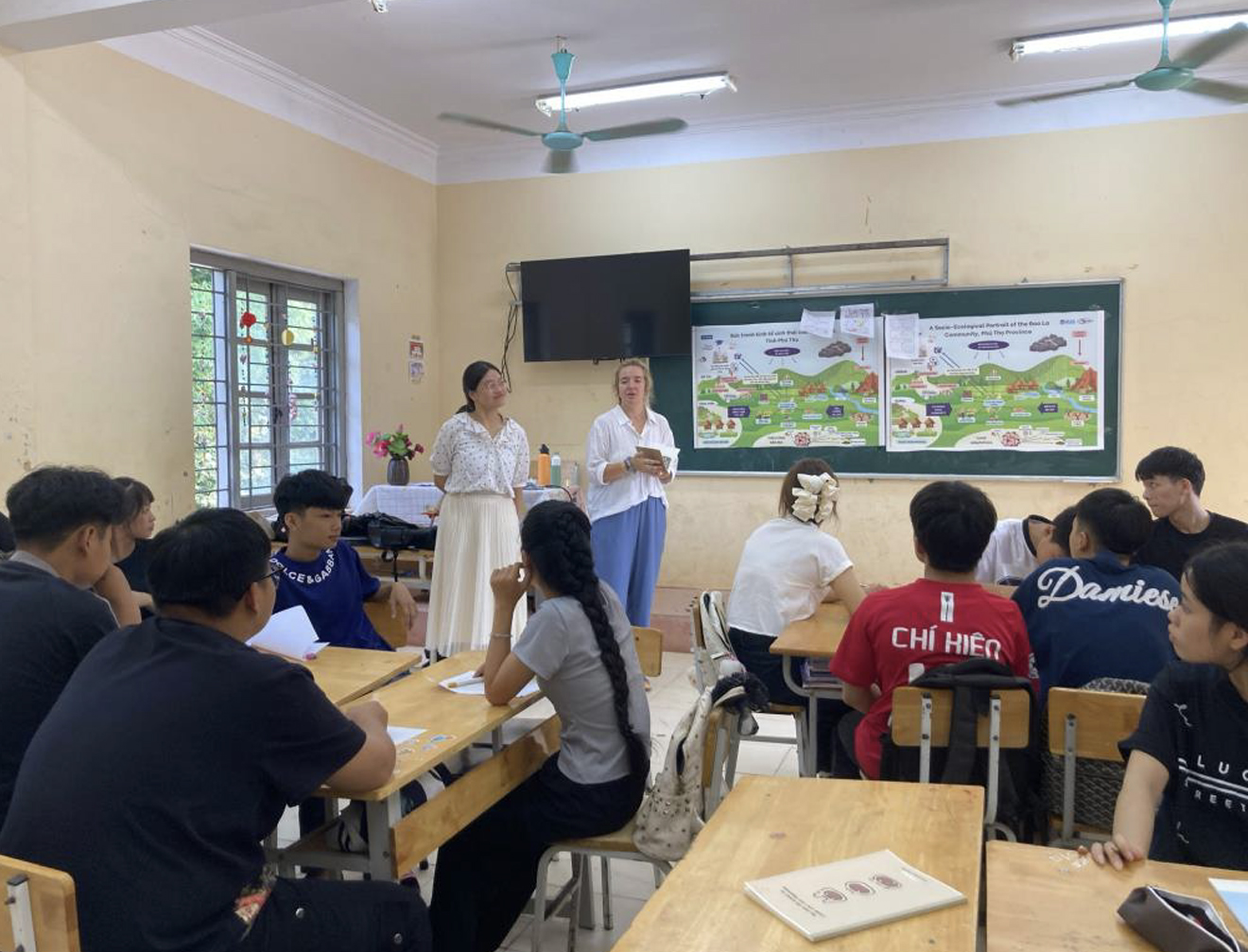
Over the past weeks, we have had the opportunity to take part in the Living Lab Vietnam 2025, an immersive field experience that brought our Sustainable Development studies to life. As members of the Society & Environment Group, our mission was to understand how communities in Mai Hich and Hang Kia live, adapt, and build resilience in the face of environmental and social challenges. From the beginning, our goal was never a one-way transfer of information. Instead, we designed this as an iterative process of give and take. We set out to give back to the communities by providing a space for their voices to be heard, while simultaneously receiving vital local knowledge that informs our shared understanding of resilience. In doing so, we returned insights generated by previous Living Lab research in Mai Hich, and we had the opportunity to expand the research area by doing fieldwork in Hang Kia for the first time. We believe that building such continuity and trust over time with participants in both locations enables deeper insights into livelihoods amid socio-ecological changes. Our journey began in Mai Hich, where we designed and facilitated a creative workshop with local high school students. This wasn’t merely a classroom exercise; it was a cornerstone of participatory action. Using a poster summarising the social and ecological findings from previous Living Labs as our starting point, we invited students to reflect on their lives in the village and to express their experiences through a comic making activity. This resulted in a hundred colorful, heartfelt stories illustrating everyday life, community values, and local perspectives on sustainability. One student told us, “Comic creation can speak our thoughts”, and that perfectly captured the spirit of the day. The truth of that student’s reflection is shown into every line of the artwork they created. These aren’t just drawings; they are visual testimonies of how communities navigate crises and build hope for the future.
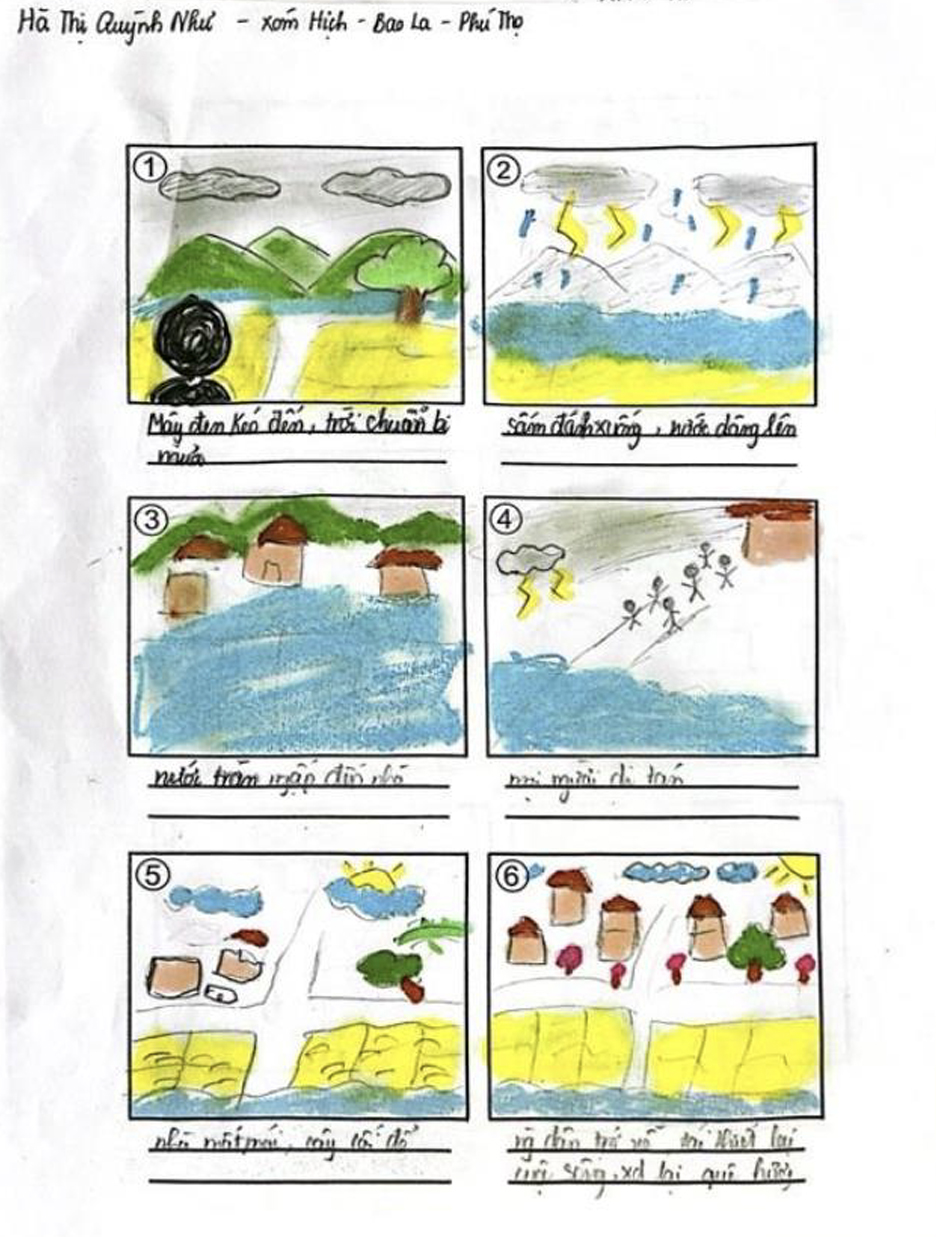
In the first comic, we see a powerful narrative of survival and reclamation. It captures the moment of families escaping the sudden surge of a flood, but it does not end in the wreckage. The comics show the collective strength of the community to clear the mud and rebuild their homeland. It serves as a reminder that while hazards are inevitable, the spirit of restoration is unstoppable.
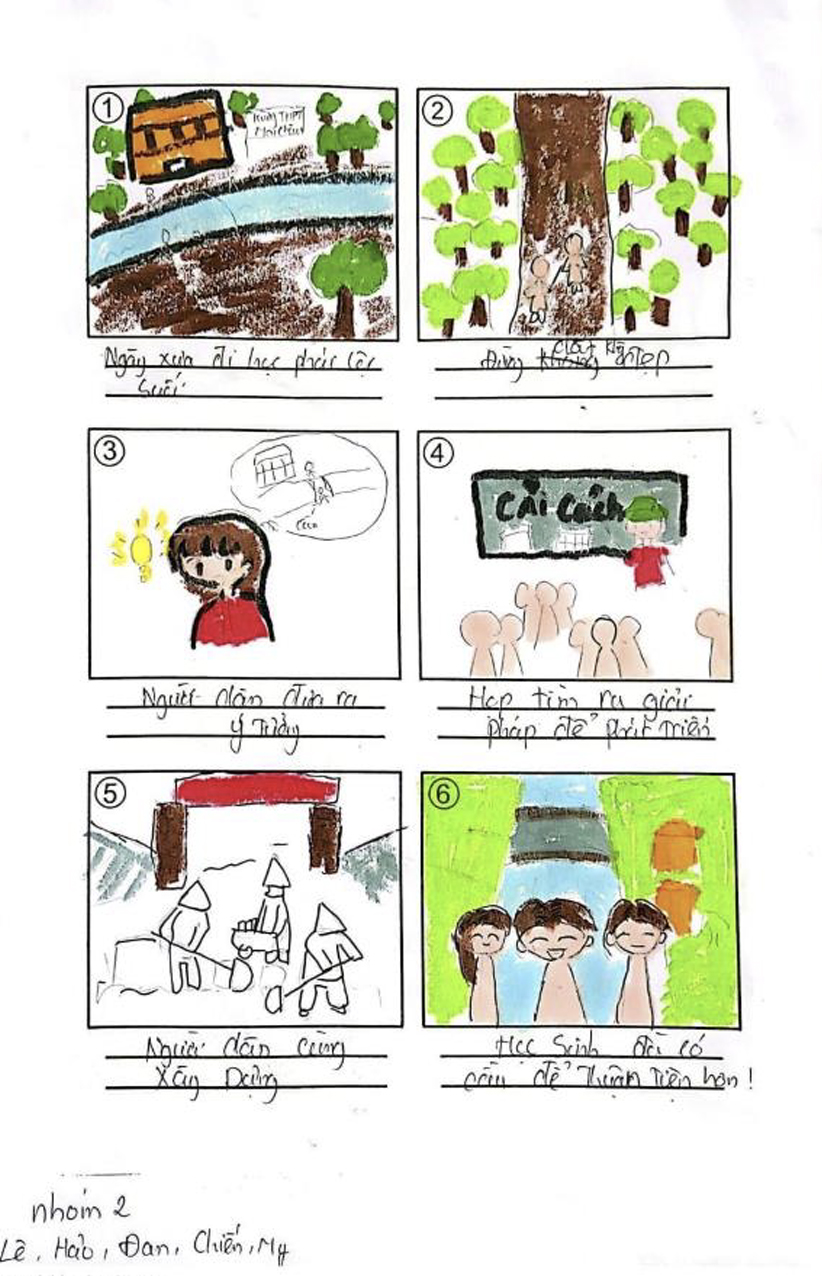
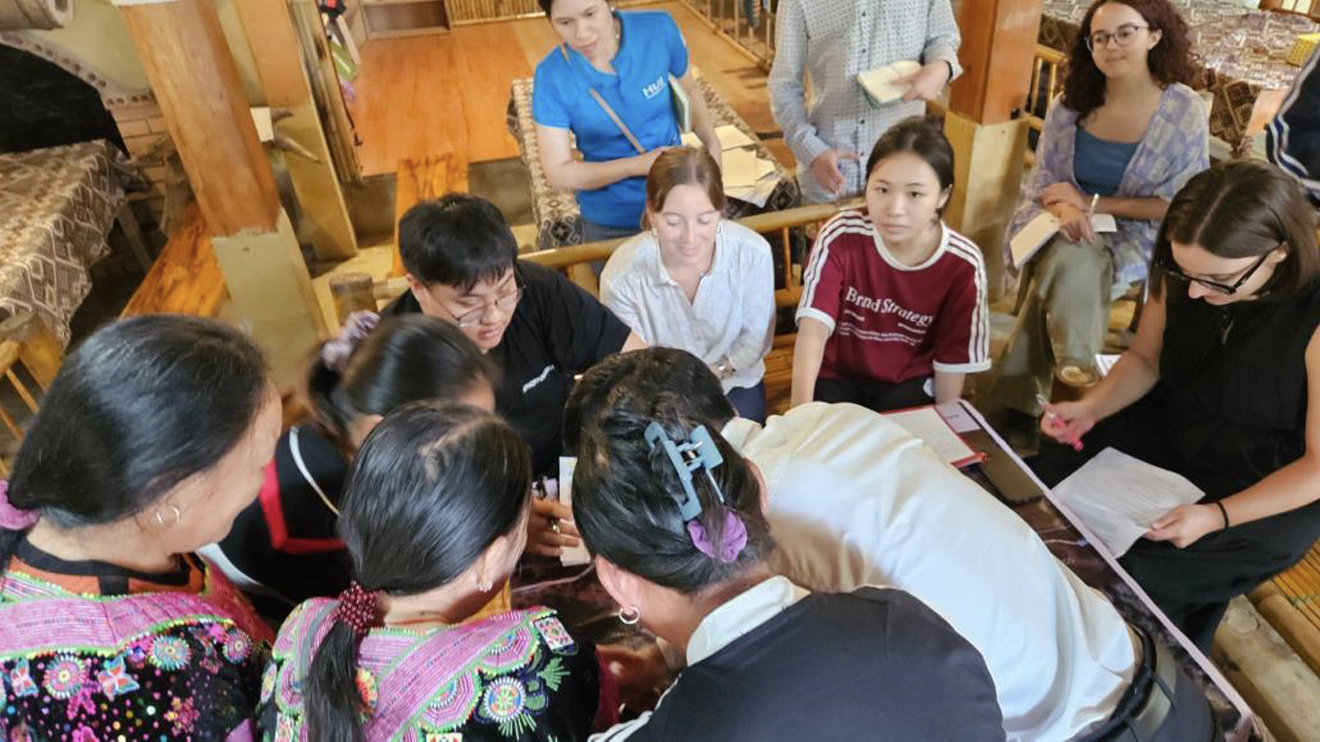
The second comic shifts focus to local empowerment and education. It illustrates a common struggle transformed by unity: the challenge of a dangerous commute to school. Through the students’ eyes, we see a community coming together to lay the foundations of a new bridge; a bridge towards knowledge and education. This story highlights how collective action doesn’t just create a physical path; it paves the way for the next generation to reach their dreams safely. Those two comics are just a small example of students picking up a pen; they aren’t just telling stories – they are documenting the resilience of the human spirit. In Hang Kia, we centered our work similarly on participatory research. Through focus groups and interviews with community members, we explored how people experience and respond to natural hazards, and what these risks mean in their daily lives. These discussions, supported by local translators and Vietnamese peers, offered invaluable insights into lived realities, reminding us that sustainability is deeply personal and context specific. Insights from the focus groups were essential, as participants described their living and working environments, key hazards, and adaptation strategies. Additionally, we conducted interviews with local authorities, which allowed us to have additional context-specific and tailored information regarding how communities in Hang Kia deal with hazards. After each session, we held debriefing moments to reflect on what we learned. These sessions turned our initial observations into insightful outputs that became essential parts of our final research. For instance, we created posters that visualized the main findings – different in details, yet similar in overarching themes. These visualizations captured the community’s lived experience with natural hazards and translated our discussions into accessible visual outputs (see Poster 1 and Poster 2 below).
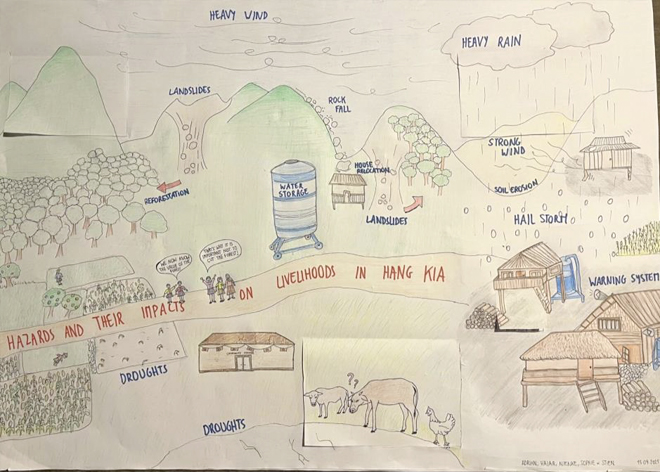
Poster 1 based on focus group 1
The main hazards identified (landslides, heavy rain and wind, drought, soil erosion, and hailstorms) have resulted in agricultural and livestock losses, underscoring the importance of reforestation. Local hazard warning systems rely on loudspeaker announcements throughout the village.
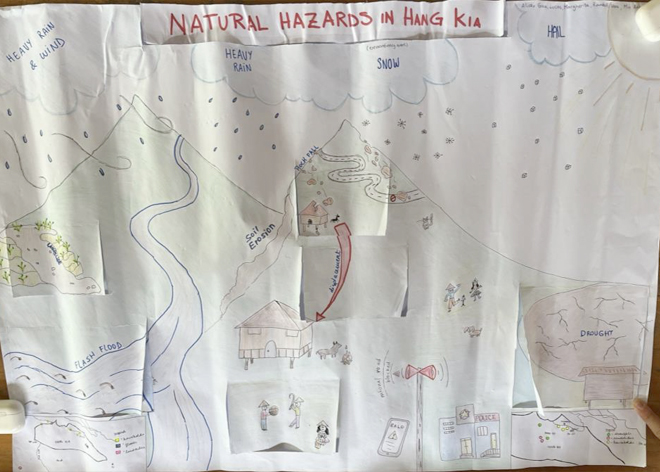
Poster 2 based on focus group 2
The main hazards identified (snow rare events, hail, heavy rain and wind, rockfalls, drought, and floods), have led to the displacement and degradation of households, agricultural land, and livestock. Additional impacts include road blockages, with early warnings delivered via mobile text messages and loudspeakers.
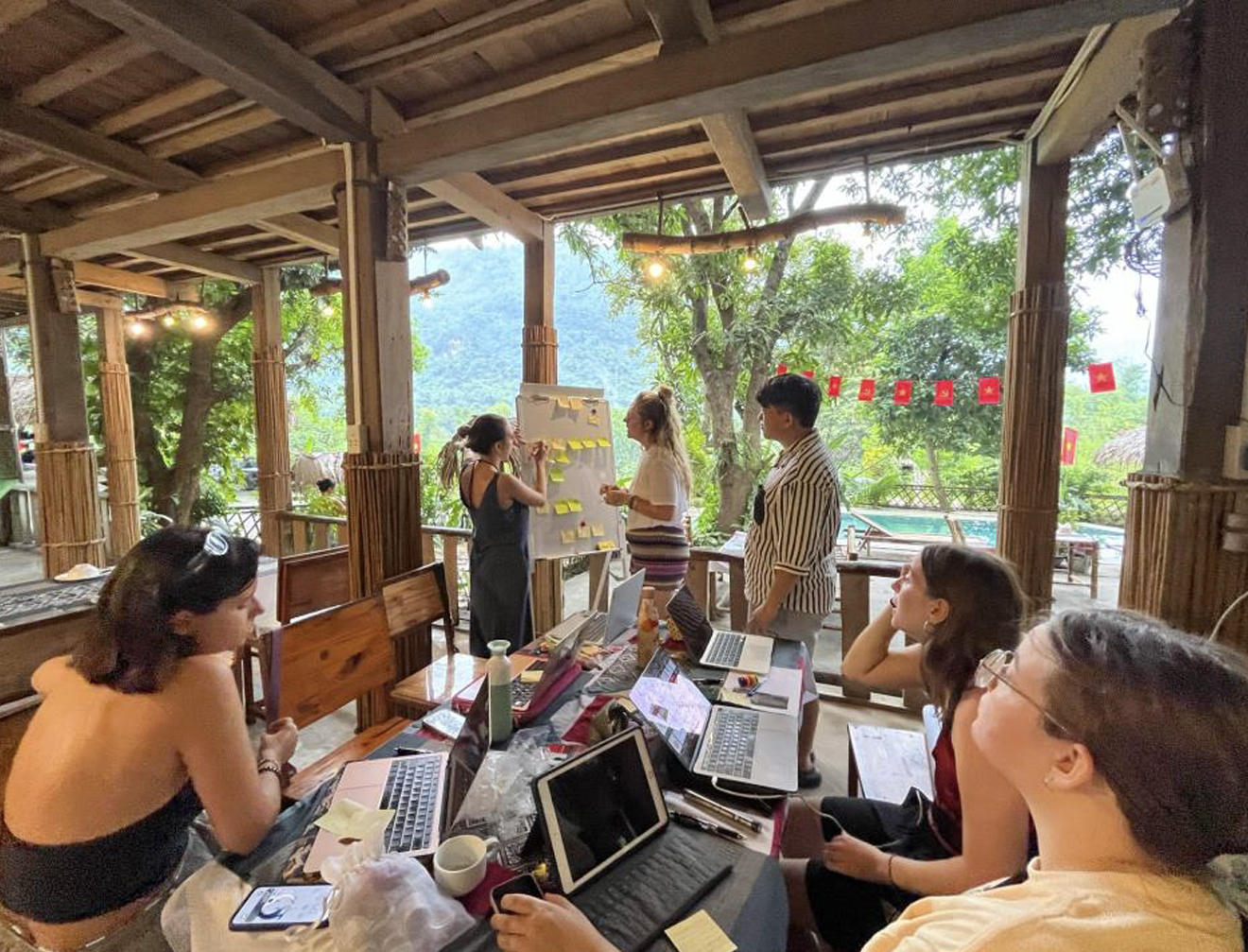
Our time in Mai Hich and Hang Kia pushed us to think differently about how communities navigate their socio-ecological realities. Through Participatory Action Research (PAR), we saw how closely everyday livelihoods are intertwined with the fragile local environment and the uncertainty it creates. What stood out most was how much adaptation relies on immediate, collective action when resources are limited. As we learned more about local adaptation, we also found our own roles shifting, from observers to participants in a shared learning process. A defining part of the Living Lab was experiencing the power of genuine engagement : bridging languages, disciplines, and cultures. Stepping out of the classroom and into the field made us realise how important it is to make research accessible and meaningful for the people it concerns. Science dissemination, through posters, comics, a booklet, and discussions through interviews, focus groups, and informal conversations, became a way to share knowledge, not just extract it. Beyond our own activities, it was greatly valuable to collaborate with other groups and take part in different fieldwork domains, from mapping waste flows to identifying plant species and sampling water. Experiencing these diverse methods firsthand helped us understand how social, ecological, and spatial dimensions intertwine. It showed us how sustainable development truly requires an interdisciplinary approach, where social and natural sciences inform and strengthen one another. The Living Lab was more than just research; it was a unique opportunity and a space of co-creation, learning, and reciprocity. We are grateful to our supervisors Prof. Constanza Parra and Dr. Vera Flores-Fernandez, to our peers, translators, and local partners from Hanoi University of Science (VNU), and especially to the communities of Mai Hich and Hang Kia for their openness and collaboration. We leave with new perspectives, on sustainability, on fieldwork, and on learning that the real value comes from working side-by-side with people, instead of just observing them from the outside.